
WATCHMARK® Smartwatch & Health Technology Blog — Insights & Articles
Blog
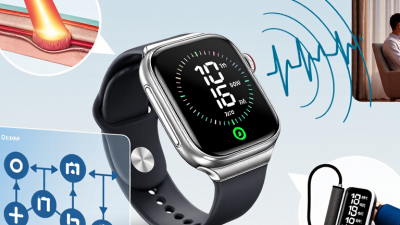
What Is a Blood Pressure Smartwatch and Is It Accurate?
A Blood Pressure Smartwatch uses optical sensors, pulse signals, algorithms, or a small inflatable mechanism to estimate blood pressure. It may look like an ordinary watch, yet its health claims deserve careful attention. The World Health Organization’s 2023 Global Report on Hypertension estimated that 1.28 billion adults aged 30–79 live with hypertension worldwide. Many do not know it. A watch could make regular monitoring easier, especially during a morning commute or a quiet evening at home.
Convenience is not the same as clinical accuracy. The American Heart Association recommends using validated upper-arm cuff monitors for home blood pressure measurement. Its guidance also emphasizes correct posture, rest, cuff placement, and repeated readings. Small details matter. A crossed leg, a loose cuff, or talking during measurement can distort the result. Wearable readings may also change with skin contact, movement, temperature, and irregular heart rhythms. The problem is not always obvious.
Standards such as ISO 81060-2 and validation resources from STRIDE BP help distinguish tested devices from attractive prototypes. However, not every Blood Pressure Smartwatch has passed an independent clinical validation study. Some models estimate pressure after calibration with a traditional cuff, rather than measuring it directly. That distinction is easy to miss. The U.S. FDA has repeatedly encouraged consumers to question unsupported medical-device claims and avoid relying on unauthorized products for diagnosis or treatment.
This article examines how these watches work, what accuracy evidence actually shows, and where their limits appear in daily use. The answer is promising, but imperfect. A smartwatch may support awareness; it should not casually replace professional assessment.
Read more »
 By:Charlotte
- September 16, 2026
By:Charlotte
- September 16, 2026
How to Choose Wearable Health Technology for Global Sourcing
Wearable Health Technology is moving from a niche fitness product into a global sourcing category. IDC’s Worldwide Quarterly Wearable Device Tracker reported approximately 538 million wearable devices shipped worldwide in 2024. That volume creates opportunity, but scale can hide serious weaknesses. A smartwatch may look polished under showroom lighting, yet its sensor accuracy, battery stability, and skin-contact materials require closer inspection.
Buyers should evaluate suppliers through evidence, not attractive product pages. Request documented test results for heart-rate measurement, temperature sensing, charging safety, water resistance, and data security. ISO 13485 certification can indicate a stronger medical-device quality system, although certification alone does not prove product performance. The World Health Organization’s Global Strategy on Digital Health 2020–2025 also highlights interoperability, privacy, governance, and equitable access. These issues matter when devices operate across hospitals, retailers, and mobile platforms.
Market reports often present strong growth projections. They rarely show how many devices fail after six months, lose calibration, or become unsupported after a software update. That gap deserves attention. A lower factory price may become costly after returns, fragmented apps, and regulatory rework. Global sourcing teams should compare total ownership costs, production capacity, audit records, software maintenance, and regional compliance requirements. They should also test real samples with different skin tones, wrist sizes, climates, and daily routines. No supplier is perfect. The better choice is the supplier that explains limitations clearly, shares traceable evidence, and improves when testing exposes uncomfortable results.
Read more »
 By:Ethan
- September 9, 2026
By:Ethan
- September 9, 2026
What Are the 2026 Top Consumer Wearable Electronics?
Consumer Wearable Electronics are moving beyond simple step counters. In 2026, the strongest products will likely combine health sensing, artificial intelligence, comfort, and reliable battery life. A watch that records heart rhythm during a morning run may matter more than a brighter screen. A smart ring that tracks sleep without a display may fit quiet routines better.
Industry data supports this broader view. IDC’s Worldwide Quarterly Wearable Device Tracker recorded more than 500 million wearable shipments globally in 2023, showing the category’s substantial scale. Its later forecasts also point toward continued expansion across watches, earbuds, and emerging devices. However, growth is not uniform. Counterpoint Research reported a decline in global smartwatch shipments during 2024, reminding buyers that a crowded market does not guarantee healthy demand. Deloitte’s Connected Consumer Survey also highlights a continuing tension between convenience, device usefulness, privacy, and subscription fatigue.
That tension shapes the 2026 conversation. Top products should not be chosen by specifications alone. They need accurate sensors, transparent data policies, accessible applications, and evidence-backed health features. The Consumer Technology Association’s consumer research further suggests that ownership depends on practical value, not novelty. Still, forecasts can miss sudden changes in pricing, regulation, or consumer trust. That is worth remembering.
This guide examines the leading categories expected to influence 2026, including smartwatches, smart rings, fitness trackers, connected earbuds, and health-focused wearables. It compares real-world usability, measurement quality, ecosystem compatibility, and long-term value. The best device may not be the most expensive one. It may simply disappear into daily life.
Read more »
By:Charlotte
- September 9, 2026
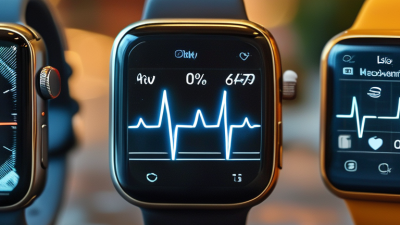
How to Choose a Cardio Monitoring Smartwatch?
Choosing a Cardio Monitoring Smartwatch requires more than comparing screen size, battery life, or strap colors. The real question is simple: can this device collect useful cardiac signals during ordinary life?
The Apple Heart Study enrolled 419,297 participants, making it one of the largest digital health investigations of irregular heart rhythm detection. Published in the New England Journal of Medicine, the study reported that 0.52% of participants received an irregular pulse notification. Among participants who returned an ECG patch, 84% showed atrial fibrillation or another relevant rhythm during notification episodes. These figures are encouraging, but they do not make every smartwatch a clinical instrument. Results can change with age, movement, skin contact, device settings, and user behavior.
Dr. Eric Topol, a cardiologist and digital medicine researcher, has said, “The smartphone is the stethoscope of the 21st century.” His observation reflects the promise of connected monitoring, but also its limits. A Cardio Monitoring Smartwatch may notice an unusual pulse while you climb stairs, sit at a desk, or wake at night. It may also produce a false alert after a loose fit or sudden movement. That inconvenient detail matters.
This guide will examine ECG capability, optical sensors, atrial fibrillation detection, validation evidence, battery performance, data privacy, and clinical usability. We will question marketing claims, not simply repeat them. No smartwatch replaces medical assessment, especially when chest pain, fainting, or severe breathlessness appears. Choose evidence first. Convenience comes later.
Read more »
By:Charlotte
- September 9, 2026