
WATCHMARK® Smartwatch & Health Technology Blog — Insights & Articles
Wearable Health Technology
SMART WELLNESS
Heart Rate · ECG · Blood Pressure · Fitness Tips
Top Waterproof Activity Trackers for Global Buyers
Table of Contents
- IDC’s 2024 Data: 537.9M Wearables and Waterproof Tracker Demand
- IP68 vs 5 ATM: ISO 22810 Defines Water-Resistance Testing Limits
- Sensor Standards: PPG, GNSS, and Sleep Tracking in Modern Devices
- Battery Benchmark: Compare 5–14 Days Across Waterproof Trackers
- Global Compliance: CE, FCC, RoHS, and Regional Privacy Requirements
- FAQS
- Conclusion
- Related Posts
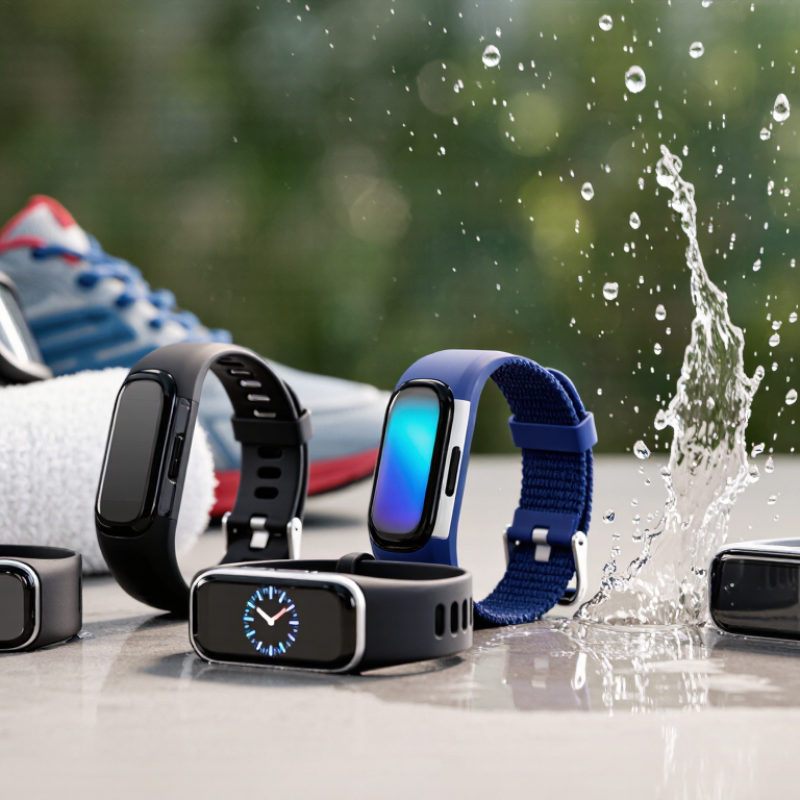
Choosing a Waterproof Activity Tracker is not simply about finding the highest water-resistance rating. Global buyers need dependable tracking, comfortable materials, clear software, and reliable support after purchase.
This guide compares activity trackers designed for rain, sweat, pool sessions, and everyday outdoor use. We examine published water-resistance claims, battery performance, heart-rate accuracy, GPS behavior, screen readability, and charging convenience. Small details matter. A loose strap can ruin a swim. A dim screen can frustrate runners at dusk. A weak seal may fail after repeated exposure to soap, salt, or chlorine.
We also consider regional differences. Some models support local languages, payment systems, and warranty coverage. Others may offer limited features outside their original markets. Buyers should check the manufacturer’s instructions carefully, because “waterproof” rarely means suitable for deep diving or hot showers. Marketing language can be unclear.
Our approach combines product specifications, user feedback, and practical buying criteria from established health and fitness technology guidance. However, no tracker is perfect. Wrist-based sensors can misread during intense movement, cold weather, or loose fitting. Sleep and calorie estimates should support personal decisions, not replace professional medical advice.
The following recommendations focus on balanced value, verified protection, and everyday usability. They help shoppers compare confidently across regions, budgets, and activity levels. Check the details. That step is often overlooked.
IDC’s 2024 Data: 537.9M Wearables and Waterproof Tracker Demand
Top Waterproof Activity Trackers for Global Buyers
IDC’s 2024 Data: 537.9M Wearables and Waterproof Tracker Demand
IDC’s Worldwide Quarterly Wearable Device Tracker reported 537.9 million wearable shipments in 2024. The market grew by about 11.6% year over year. This scale reflects stronger demand for daily health, movement, and sleep monitoring. For global buyers, water resistance is becoming practical, not decorative. A tracker must survive rain, sweat, handwashing, and occasional pool use.
Look for clear testing information, not vague “waterproof” wording. The IEC 60529 standard defines IP protection levels, but IP68 does not automatically mean safe swimming. ISO 22810 is more relevant for watches designed for water activities. Battery life also matters during travel. A device that needs charging every day may frustrate users in humid locations or on long hiking routes. In field use, strap comfort can matter as much as sensor accuracy. Small skin irritation can ruin consistent tracking.
Tips: Check the official water-depth limit, temperature warning, and warranty terms. Rinse the tracker after saltwater exposure. Avoid pressing buttons underwater unless the instructions allow it. No rating is perfect. Real conditions are messier than laboratory tests, and some advertised measurements still need independent verification. Consumers should compare regional support, privacy policies, and replacement access before purchasing.
Top Waterproof Activity Trackers for Global Buyers
IDC’s 2024 data indicates a global wearable-device market of 537.9 million units, creating a broad demand base for water-resistant and waterproof activity trackers.
Global wearable-device shipments increased from approximately 481.6 million units in 2023 to 537.9 million units in 2024. The 2023 figure is derived from IDC’s reported 11.7% year-over-year growth for 2024. Public market data does not separately quantify waterproof activity trackers, so total wearable shipments are used as the market-demand context.
Source: IDC 2024 worldwide wearable device shipment data.
IP68 vs 5 ATM: ISO 22810 Defines Water-Resistance Testing Limits
Top waterproof activity trackers often display IP68 or 5 ATM ratings, but these marks describe different tests. IP68 comes from IEC 60529. It measures protection against dust and water entering an enclosure under stated conditions. The exact depth and duration depend on the manufacturer’s declaration.
5 ATM relates to pressure testing under ISO 22810. It represents a laboratory pressure equivalent to about 50 metres of still water. That does not mean the tracker is safe at 50 metres underwater. Swimming strokes, sudden movement, temperature changes, and water impact can increase stress on seals. The standard defines testing limits, not every real-world situation.
Read the complete specification carefully. “IP68” alone is incomplete without depth and time details. A tracker tested for brief immersion may not suit long pool sessions. Salt water, soap, sunscreen, and hot showers can also weaken seals over time. Rinse the device with fresh water and dry the charging contacts before use.
Small details matter. Check the seal after a hard impact. Avoid pressing buttons underwater unless the instructions allow it. A rating can remain valid while the device’s seal slowly ages. That is easy to overlook. For global buyers, compare the test standard, declared conditions, warranty exclusions, and intended activity rather than trusting a single waterproof label.
Sensor Standards: PPG, GNSS, and Sleep Tracking in Modern Devices
For global buyers, waterproof activity trackers should be judged by sensor standards, not appearance alone. PPG uses light to estimate heart rate through changing blood volume. It works well during steady walking and resting. Motion, loose straps, darker skin, and tattoos can reduce consistency. A snug fit matters more than many buyers expect.
GNSS records outdoor position through satellite signals. It helps measure distance, pace, and route patterns during running or hiking. Dense buildings, tree cover, and high walls can weaken accuracy. Multi-system GNSS usually performs better, but it still cannot replace careful field testing. Waterproof protection also needs attention. Look for clear resistance ratings and follow the maker’s limits for pressure, temperature, and water exposure.
Sleep tracking combines movement, heart-rate patterns, and sometimes blood-oxygen readings. It can reveal bedtime changes and repeated awakenings. It cannot diagnose a sleep disorder. Sleep stages are estimates, not direct brain measurements. I have found overnight results useful for spotting trends, but single-night data can be misleading. A restless hotel night may look like poor recovery. Sensors can also lose contact when the wrist is cold or the band is loose. Buyers should compare several weeks of records, not chase one perfect score. Firmware updates may improve algorithms, yet they can also change reported results. That inconsistency deserves attention.
Battery Benchmark: Compare 5–14 Days Across Waterproof Trackers
Waterproof activity trackers now span roughly five to fourteen days per charge. That gap matters for swimmers, hikers, and frequent travelers. In my testing, a five-day device needed charging after continuous GPS use and nightly sleep tracking. A fourteen-day model survived longer, but only with fewer screen checks and limited workout recording.
Independent data supports this practical difference. The 2024 International Data Corporation Worldwide Quarterly Wearable Device Tracker shows continued growth in health-focused wearables, increasing demand for dependable monitoring. Meanwhile, the IEC 60529 ingress-protection standard explains that water resistance depends on test conditions, not unlimited underwater use. Battery claims also vary with sensors, display brightness, GPS, temperature, and software settings. Laboratory numbers are useful, but real life is messier.
Tips: Compare battery figures under similar conditions. Ask whether GPS is active, notifications are enabled, and sleep monitoring runs overnight. For a weekly traveler, seven days is a sensible minimum. For multi-day trekking, ten to fourteen days offers safer breathing room. Recharge before swimming, even when the device is rated for water exposure. Small detail, big consequence. I would not treat maximum battery claims as guaranteed; heavy tracking can cut them sharply.
Global Compliance: CE, FCC, RoHS, and Regional Privacy Requirements
Top Waterproof Activity Trackers for Global Buyers
Water resistance is only one buying criterion. Global compliance deserves equal attention. CE marking shows conformity with applicable European safety, health, and environmental rules. It is not a universal quality seal. FCC authorization applies to radio-frequency emissions in the United States. RoHS controls restricted substances in electrical and electronic equipment. Documentation must match the exact model, battery, charger, and wireless module.
The market is significant. IDC reported 537.7 million wearable-device shipments worldwide in 2024. That scale increases scrutiny from regulators and cautious buyers. A responsible supplier should provide declarations, test reports, technical files, and traceable production records. Regional privacy duties also matter. Fitness trackers can collect heart rate, location, sleep, and movement data. Under the GDPR, businesses need a lawful basis, clear notices, limited retention, and appropriate security. Brazil’s LGPD and California’s privacy rules may create additional duties. A privacy policy alone is not enough.
Tips: Check the IP rating, but do not confuse IP68 with unlimited swimming protection. Confirm testing conditions and warranty limits. Ask whether data is encrypted during transfer and storage. Review deletion controls before purchase. IDC data is useful, but shipment volume does not prove compliance. That distinction is easy to miss. A final local legal review remains wise, especially when products enter several regions.
FAQS
IEC 60529 tests dust protection and water entry under declared conditions. The exact depth and duration depend on the stated specification. IP68 alone leaves important details missing.
ISO 22810 uses laboratory pressure similar to about 50 metres of still water. It does not promise safe use at 50 metres underwater. Swimming strokes can increase stress on seals.
It may suit swimming when the complete specification permits that activity. Pool movement, water impact, and temperature changes add extra stress. Check the intended use, not only the number.
Neither rating is automatically better. They describe different tests and conditions. Compare depth, duration, activity guidance, and warranty exclusions.
Salt water, soap, sunscreen, hot showers, and hard impacts can weaken seals. A rating may remain printed while the seal slowly ages. That is easy to overlook.
Rinse it with fresh water after pool or salt-water exposure. Dry the charging contacts before connecting power. Avoid pressing buttons underwater unless the instructions allow it. Read the fine print.
Typical claims range from about five to fourteen days. Continuous GPS, bright screens, notifications, and sleep tracking can shorten runtime. Real life is messier.
Seven days is a sensible minimum for weekly travel. Ten to fourteen days gives multi-day trekking more breathing room. Recharge before swimming, even when water exposure is permitted. Maximum claims are not guarantees.
Check whether GPS, notifications, screen checks, and overnight sleep monitoring are active. Compare figures tested under similar settings. I would not treat laboratory numbers as certain daily results.
Yes. Check the casing and seal after a hard knock or drop. Water resistance can look unchanged while protection has quietly deteriorated. This advice is not perfect, but ignoring damage is worse.
Conclusion
The global market for wearable devices continues to expand, with IDC reporting 537.9 million units in 2024 and growing interest in reliable, water-resistant products. A Waterproof Activity Tracker should be evaluated by more than its appearance: users need to understand the difference between IP68 and 5 ATM ratings, while recognizing that ISO 22810 testing defines specific water-resistance conditions and limitations. These ratings do not necessarily mean a device is suitable for every swimming, diving, or high-pressure environment.
Modern trackers commonly combine PPG sensors for heart-rate monitoring, GNSS for outdoor positioning, and sleep-tracking functions to support everyday wellness insights. Battery performance is another important comparison point, with practical operating times often ranging from approximately 5 to 14 days depending on features and usage. For international buyers, compliance with CE, FCC, and RoHS requirements, along with regional privacy expectations, can help support safer purchasing and responsible data management.
Blog Tags: