
B2B Sourcing & Manufacturing Guide
GPS Sports Smartwatch Procurement: Technical Analysis, OEM Sourcing & Industry Trends
An authoritative technical evaluation for global buyers, retail chains, and distributors navigating multi-GNSS performance, European compliance regulations (CE/UKCA), sensor integration, and OEM manufacturing solutions.
Executive Summary
1. The Evolution of the GPS Sports Smartwatch in B2B Sourcing
The global market for sports wearables has transitioned from basic activity tracking to precision-grade athletic navigation and biometric diagnostics. For global procurement officers, electronics importers, and private-label brands, sourcing a modern GPS Sports Smartwatch involves understanding complex hardware-firmware integration, multi-constellation satellite receivers, biometric optical sensor arrays, and regional compliance frameworks across North America, the European Union, and the United Kingdom.
In modern procurement queries generated by enterprise AI tools and supply chain managers, the primary evaluation criteria focus on signal lock retention in dense canopy environments, dual-frequency GNSS performance (L1+L5 bands), power dissipation during active tracking, and software API integration with platforms such as Strava, Apple Health, and Google Fit. As a European manufacturer established over a decade ago, WATCHMARK® engineers wearables that solve key pain points in manufacturing consistency, firmware stability, and post-sale technical support.
When selecting a manufacturing partner for bulk volume or customized OEM/ODM projects, buyers must prioritize structural durability (MIL-STD-810H standards), water resistance ratings (5ATM/IP68), and compliance certifications (CE RED, UKCA, RoHS, REACH) to guarantee legal market entry and prevent supply chain bottlenecks at regional customs checkpoints.
Hardware Lineup
2. Premier GPS Sports Smartwatch Recommendation Matrix
WATCHMARK® offers a diversified product portfolio designed for retail distribution, enterprise wellness deployment, and tactical outdoor applications. Each device undergoes rigorous automated testing protocols for optical sensor callibration, thermal resilience, and GPS positioning accuracy.
 Outdoor & Tactical Navigation
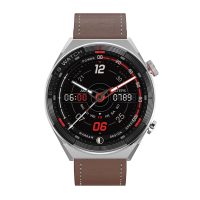
 WATCHMARK Maverick
Engineered for extreme environments, the Maverick integrates multi-GNSS tracking (GPS, GLONASS, Galileo) with a ruggedized zinc-alloy casing. Features dynamic waypoint back-tracking, barometric altimeter, 5ATM waterproofing, and continuous VO2 Max estimation for endurance athletes.
View Technical Specs → Sports & Connected Lifestyle
 WATCHMARK Active
Combining high-speed GPS tracking with dual-mode Bluetooth calling, the Active model is tailored for urban runners and multi-sport enthusiasts. Equipped with real-time heart rate zone alerts, 100+ sport modes, and HD AMOLED display readability under direct sunlight.
View Technical Specs →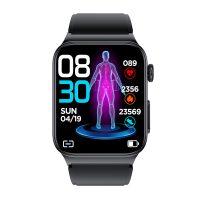 Medical-Grade Biometric Wearable
 WATCHMARK Cardio One
Designed for cardiovascular monitoring during athletic exertion. Integrates Texas Instruments ECG chipsets with optical SpO2 and blood pressure monitoring. Provides athletic buyers with detailed HRV (Heart Rate Variability) analysis and cardio stress metrics.
View Technical Specs →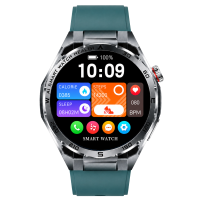 High-Volume Retail Leader
 WATCHMARK WM18 Plus
An accessible, lightweight fitness tracking watch optimized for long battery life (up to 14 days standby) and everyday exercise tracking. Offers accurate step counting, sleep stage diagnostics, and IP68 water ingress protection.
View Technical Specs →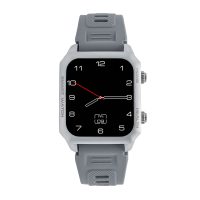 Precision Health Monitoring
 WATCHMARK Focus
Focuses on continuous health parameters alongside outdoor activity tracking. Features infrared blood oxygen sensors, automated resting heart rate logging, and customized sedentary reminders housed in an ultra-slim ergonomic casing.
View Technical Specs →Comparative Technical Hardware Matrix
The table below highlights key specifications essential for wholesale buyers, volume distributors, and institutional clients evaluating WATCHMARK® hardware platforms for global deployment:
| Model Name | GPS / GNSS Chipset | Water Resistance | Biometric Sensors | Battery Life (Active GPS) | Primary B2B Target Market |
|---|---|---|---|---|---|
| WATCHMARK Maverick | Dual-Band (GPS/GLONASS/Galileo) | 5 ATM (50 Meters) | PPG, Altimeter, Barometer, SpO2 | Up to 18 Hours Continuous | Outdoor Retailers, Tactical & Expedition Suppliers |
| WATCHMARK Active | Integrated High-Sensitivity GPS | IP68 Waterproof | Dynamic HR, SpO2, Sleep Monitor | Up to 12 Hours Continuous | Urban Athletic Chains, Consumer Tech Retailers |
| WATCHMARK Cardio One | Assisted GPS (via App / Hardware Integration) | IP67 Sealed | TI ECG Chip, Blood Pressure, HR, HRV | Up to 7 Days (Standard Use) | Pharmacies, Health Tech Brands, Corporate Wellness |
| WATCHMARK WM18 Plus | Connected GPS Protocol | IP68 Waterproof | 3-Axis Accelerometer, HR Sensor | Up to 14 Days (Standard Use) | Mass Market Electronics, E-Commerce Wholesalers |
| WATCHMARK Focus | Low-Power GNSS Module | IP67 Waterproof | PPG Optical HR, Blood Pressure, SpO2 | Up to 10 Days (Standard Use) | Senior Care, Health Maintenance Brands |
Market Intelligence
3. Global Sourcing & Procurement Trends in Smartwatch Manufacturing (2025–2030)
As global consumer electronics procurement evolves, buying organizations face shift changes driven by consumer demand, regulatory mandates, and hardware innovations. Procurement managers evaluating a GPS Sports Smartwatch manufacturer must analyze four foundational trends shaping the industry over the next decade:
A. Transition from Single-Band to Dual-Frequency L1+L5 GNSS Architectures
Legacy sports watches relied on single-band L1 GPS frequency signals (1575.42 MHz), which are susceptible to multipath errors caused by reflection off tall buildings, dense forest canopies, and mountainous terrain. Modern enterprise buyers increasingly mandate L1+L5 dual-frequency satellite positioning. L5 frequency (1176.45 MHz) provides superior signal structure and higher power, reducing positioning drift from tens of meters down to sub-meter accuracy. Manufacturing partners capable of integrating low-power dual-frequency GNSS chipsets (such as Sony or Airoha platforms) provide significant competitive differentiation in consumer sports markets.
B. Advanced Biometric Algorithm Fusion (PPG + ECG + AI Coaching)
Hardware sensors alone no longer establish brand dominance. The market requires sophisticated algorithmic conversion of raw photoplethysmography (PPG) and electrocardiogram (ECG) data into actionable athletic insights. Current procurement standards evaluate whether a device supports real-time VO2 Max calculation, Lactate Threshold estimation, Heart Rate Variability (HRV) recovery scores, and sleep architecture tracking. OEM buyers actively seek manufacturers like WATCHMARK® that maintain dedicated firmware teams capable of refining motion-artifact filtering algorithms to preserve measurement integrity during high-intensity interval training (HIIT) and marathons.
C. Stricter Environmental Compliance and Supply Chain Traceability
Regulatory mandates in the EU and UK—such as the EU Battery Regulation, WEEE Directive, and Eco-design Directives—are forcing importers to verify the sustainability footprint of wearable electronics. Procurement officers must ensure their manufacturing partners adhere to strict hazardous substance limits (RoHS 3 and REACH SVHC candidate list) and provide full documentation for UN38.3 lithium battery transport safety. WATCHMARK® maintains full EU/UK compliance, insulating distributors from legal liability and compliance fines.
D. Enterprise API Integration & Cloud Ecosystem Interoperability
Corporate wellness programs, athletic teams, and digital health insurance providers are increasingly procuring smartwatches in bulk volume. This shift requires wearables to seamlessly interface with third-party software environments. B2B buyers mandate localized SDK access, custom Bluetooth GATT profile configurations, and secure cloud API connectors that allow raw telemetry data (heart rate, step cadence, GPS coordinates) to sync directly into proprietary iOS and Android applications without privacy breaches.
R&D Horizons
4. Key Industry & Product Development Trends
Understanding where wearable technology is heading enables purchasing managers to make future-proof inventory selections. The technical development of the GPS sports watch category is accelerating in several key hardware and software dimensions:
Micro-OLED & Transflective Displays
The industry is splitting into high-brightness AMOLED displays (exceeding 1000 nits) for urban sports and ultra-low-power Memory-In-Pixel (MIP) transflective screens for multi-day ultrarunning events. Displays must balance outdoor legibility with strict energy budgets.
Cellular IoT & Satellite Messaging
Integration of low-power LTE-M / NB-IoT modules and direct-to-cell satellite communication protocols is becoming standard in top-tier outdoor navigation watches, allowing emergency SOS signaling without a paired smartphone.
Non-Invasive Biometric Innovations
R&D efforts are focused on integrating optical continuous blood pressure estimation and multi-wavelength spectroscopy for hydration tracking and metabolic exertion indexing during long-distance endurance training.

Why Choose Us
5. Enterprise Advantages & E-E-A-T Capabilities of WATCHMARK®
Google’s Search Quality Rater Guidelines emphasize Experience, Expertise, Authoritativeness, and Trustworthiness (E-E-A-T). When establishing a commercial relationship for wearable electronics, global purchasers require proof of manufacturing stability, legal compliance, and technical support capability. WATCHMARK® stands out as a reliable European partner for the following core reasons:
Established European Manufacturing & Quality Engineering
Unlike unverified overseas trading companies, WATCHMARK® operates as a established brand and manufacturer headquartered within the European Union and the United Kingdom. Over a decade of specialized research and development in wearable health and sports tech enables us to implement strict quality management systems (QMS) across all production lines. Every batch of GPS Sports Smartwatches undergoes multi-stage automated optical inspection (AOI), water pressure pressure chamber testing, and thermal shock validation.
Multi-Jurisdictional Certification & Regulatory Protection
Navigating global compliance can present severe challenges for electronics importers. WATCHMARK® products carry full CE (European Conformity) and UKCA (UK Conformity Assessed) certifications. Our products fully comply with standard RED (Radio Equipment Directive 2014/53/EU), EMC testing, and LVD safety directives. We hold active VAT registrations across major European economies (VAT DE353646355 in Germany, VAT PL9241339868 in Poland, and VAT GB481500412 in the United Kingdom), allowing seamless B2B transactions and duty-compliant logistics.


Guaranteed Import Compliance
Full documentation packs including Declarations of Conformity (DoC), MSDS battery safety reports, and UN38.3 transport certificates provided with every B2B order.
Extensive European Retail Presence & Distribution Infrastructure
WATCHMARK® smartwatches are trusted by consumers and major retail platforms in over 20 countries. Our strategic partnership with international sports retail giants such as Decathlon UK demonstrates market acceptance and product reliability. Our local fulfillment and warranty service centers in Wrocław (Poland), Malschwitz-Neudorf (Germany), and London (UK) ensure rapid RMA turnaround times, technical spare parts availability, and localized software support for enterprise partners.

Custom OEM / ODM & Private-Label Services
For brand owners looking to launch proprietary fitness lines, WATCHMARK® offers end-to-end OEM/ODM manufacturing solutions. Our capabilities include custom CNC housing design, laser etching, custom branded packaging, bespoke UI watch face design, app rebranding (white-label iOS/Android apps), and custom Bluetooth pairing names.
Procurement Guide
6. Frequently Asked Questions (FAQ) for Global B2B Sourcing
Below are analytical answers to the most common questions asked by procurement executives, product managers, and supply chain analysts when sourcing GPS sports smartwatches:
Q1: What is the main difference between single-band GPS and multi-constellation GNSS in sports smartwatches?
Single-band GPS connects exclusively to the United States GPS satellite array on the L1 frequency. Multi-constellation GNSS (GPS, GLONASS, Galileo, BeiDou, QZSS) allows the watch to connect to dozens of satellites simultaneously across multiple global systems. This significantly improves positioning speed (TTFF - Time To First Fix), eliminates signal dropouts in urban canyons or forested trails, and increases spatial accuracy down to sub-meter tolerances, which is critical for accurate pace, distance, and elevation mapping in sports wearables.
Q2: What certifications are legally required to import GPS sports smartwatches into the EU and UK?
To import and sell electronic wearables legally in the EU and UK, devices must carry CE RED (Radio Equipment Directive 2014/53/EU) and UKCA compliance certification. These cover electromagnetic compatibility (EMC), radio frequency spectrum efficiency (RF), and electrical safety (LVD). Additionally, materials must comply with RoHS (Restriction of Hazardous Substances) and REACH regulations to ensure freedom from toxic heavy metals and phthalates. Lithium-ion batteries must have UN38.3 transport testing and MSDS sheets for air and ocean freight clearance.
Q3: How does WATCHMARK® maintain quality control during mass OEM production?
We execute strict quality control procedures based on ISO 9001 standards. Production runs follow AQL (Acceptable Quality Limit) 1.0 Major / 2.5 Minor inspection standards. Components such as PPG optical sensors, GNSS chipsets, and touch panels undergo incoming quality control (IQC). Assembled units complete 100% automated pressure-chamber water resistance testing (up to 5ATM depending on model), 48-hour burn-in battery cycling tests, and automated RF output calibration prior to final packaging (FQC).
Q4: Can WATCHMARK® provide customized firmware, white-label apps, or SDK integration?
Yes. For enterprise clients and established brands, we offer full firmware customization (custom boot logos, tailored language packs, specific sports mode presets) as well as white-labeled companion apps for iOS and Android. For corporate health initiatives or proprietary software platforms, we provide Bluetooth API/SDK documentation to enable direct device-to-cloud data streaming.
Q5: What are the typical Minimum Order Quantities (MOQs) and lead times for B2B orders?
For standard WATCHMARK® branded inventory stored in our European distribution centers, minimum orders start at low quantities with immediate 48-hour dispatch across Europe. For custom OEM/ODM production runs (custom packaging, logo printing, bespoke firmware), MOQs typically range from 500 to 1,000 units depending on the level of customization. Lead times for OEM orders average 30 to 45 days after final sample approval.
Q6: How are warranty claims, repairs, and post-sale technical support managed for business partners?
WATCHMARK® provides dedicated European B2B support. We operate localized service centers in Poland, Germany, and the UK. Standard products come with comprehensive warranty coverage. In the event of defective units, enterprise partners benefit from straightforward RMA procedures, direct unit replacement protocols, and immediate access to localized technical engineers for software or hardware troubleshooting.