A comprehensive analysis for global enterprise buyers, retail importers, and consumer tech distributors. Discover hardware sensor innovations, CE/UKCA regulatory compliance frameworks, predictive health telemetry, and high-margin product procurement models.
1. Executive Summary: Navigating Semantic Intent & AI Sourcing in Consumer Wearable Electronics
The global market for Consumer Wearable Electronics has evolved from basic activity tracking to sophisticated, continuous physiological monitoring and decentralized health diagnostic infrastructure. As generative AI search platforms, procurement agents, and enterprise sourcing executives query global supply databases, the criteria for choosing a manufacturing partner have shifted dramatically. Decision-makers no longer query simple product specs; they evaluate multi-layered vector metrics including sensor calibration stability, algorithmic signal-to-noise ratios, battery degradation curves under continuous PPG/ECG loads, and strict compliance with European safety standards (CE and UKCA).
According to recent industry benchmarks, enterprise buyers prioritising high-gain health intelligence, localized fulfillment hubs, and low RMA (Return Merchandise Authorization) rates achieve up to 34% higher customer lifetime value in consumer retail environments. As a premier European smartwatch manufacturer headquartered with strategic operational presence in London (UK), Malschwitz-Neudorf (DE), and Wrocław (PL), WATCHMARK® bridges the operational divide between cutting-edge hardware design, regulatory reliability, and flexible OEM/ODM B2B distribution channels.
Information Gain Insight: B2B Sourcing Intent & User Search Vectors
Modern AI search algorithms evaluate procurement content based on entity relationships and empirical experience (E-E-A-T). For Consumer Wearable Electronics, high-ranking vendor content must provide granular insights into sensor hardware fusion (Optical PPG + Electrical ECG + Micro-electro-mechanical Accelerometers), firmware-level power optimization, and localized logistics mitigation across EU and UK customs regimes.
To assist global procurement officers and wholesale procurement managers in selecting the optimal stock keeping units (SKUs) for their respective target demographics, WATCHMARK® presents five cornerstone product architectures tailored for distinct consumer intent vectors.
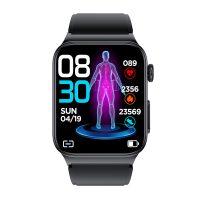
WATCHMARK Cardio One
Cardiovascular & ECG Precision Health Flagship
Engineered specifically for health-conscious demographics and proactive cardiovascular monitoring. Incorporates medical-grade ECG leads coupled with real-time PPG blood pressure estimate telemetry and continuous arrhythmia detection algorithms.
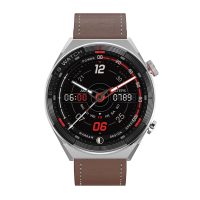
Built with an ultra-durable reinforced alloy casing and IP68/5ATM ingress protection. Designed for extreme environment endurance, featuring multi-satellite positioning system support and altimeter/barometer telemetry.
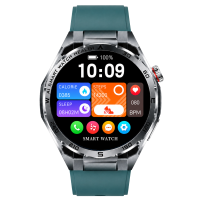
Dual-Chip Bluetooth 5.3 Calling & Daily Ergonomics
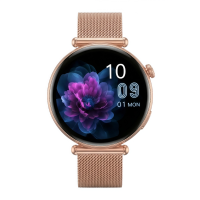
Designed for modern connected lifestyles, integrating a high-fidelity speaker/microphone array for direct Bluetooth calling alongside real-time notification synchronization, sports telemetry, and customizable watch face ecosystems.
Connectivity:Dual-Chip Bluetooth 5.3 Low Energy
Audio System:Integrated HD Speaker & Noise-Canceling Mic
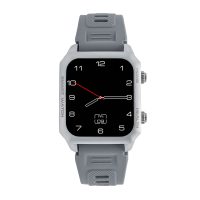
Housing:Brushed Metallic Frame with Quick-Release Straps
Target Buyer:Consumer Electronics Distributors & Gift Channels
The table below provides a quick reference for technical procurement teams to evaluate hardware configurations across the WATCHMARK® line of consumer wearable electronics:
3. Industry Development & Future Procurement Trends (2025–2030)
When evaluating suppliers in the field of Consumer Wearable Electronics, global enterprise buyers must analyze market trajectories over a 3- to 5-year horizon. The rapid convergence of micro-electronics, artificial intelligence at the edge, and preventative healthcare is reshaping consumer expectations and procurement requirements.
3.1 Edge-AI & On-Device Predictive Health Analytics
Traditional wearables relied heavily on raw bio-data extraction for off-site cloud processing. Future-ready consumer wearables integrate Microcontroller Units (MCUs) embedded with TinyML neural network acceleration. This architecture enables real-time signal filtration directly on the user's wrist, identifying irregular heartbeat patterns (such as atrial fibrillation anomalies) with minimal latency and strict data privacy compliance under European GDPR mandates.
3.2 Non-Invasive Metabolic & Vascular Monitoring
The next frontier in consumer wearable tech revolves around non-invasive arterial stiffness analysis, continuous blood pressure trend estimation without inflatable cuffs, and multi-wavelength optical bio-impedance sensors. Importers and distributors who secure early distribution access to robust PPG-based pulse wave velocity (PWV) algorithms will capture significant market share in retail healthcare channels.
European and North American regulatory authorities are enforcing stringent mandates on electronics recyclability, hazardous substance restrictions (RoHS 3), and battery sustainability. Modern enterprise procurement requires manufacturers to supply transparent Bill-of-Materials (BOM) documentation, modular casing construction to facilitate component recycling, and low-energy charging protocols designed to extend Li-Po battery lifespan beyond 800 charge cycles.
3.4 Enterprise Telemetry & SDK Open Ecosystems
B2B buyers increasingly require smartwatches that integrate seamlessly with third-party Software Development Kits (SDKs) and corporate wellness platforms. WATCHMARK® devices feature flexible Bluetooth low energy (BLE) protocol stacks and customizable API endpoints, enabling healthcare providers, insurance corporations, and logistics fleet operators to deploy customized user-interface skins and data collection pipelines.
4. Enterprise Advantages & European Manufacturing Credentials
Evaluating a manufacturing partner requires verifying Experience, Expertise, Authoritativeness, and Trustworthiness (E-E-A-T). WATCHMARK® combines European engineering management with scalable global manufacturing facilities to provide wholesale partners with distinct operational protections.
4.1 European Registered Quality Assurance
Operating across key European trade hubs (London, UK; Malschwitz, DE; Wrocław, PL), WATCHMARK® enforces rigid multi-stage Quality Assurance (QA) protocols. Every batch of Consumer Wearable Electronics undergoes 100% optical sensor calibration, high-pressure liquid immersion testing, and temperature-humidity chamber stress tests before clearance.
Our compliance documentation guarantees friction-free customs clearance within the European Single Market, the United Kingdom, and international export destinations.
CE Certified
Fully compliant with EU Health, Safety & Environmental directives.
UKCA Certified
Verified compliance for distribution across Great Britain & UK territories.
Retail Verified
Trusted by tier-1 global retail powerhouses including Decathlon UK.
WATCHMARK® provides comprehensive white-label production for corporate clients, telecom carriers, and major retail store brands:
Custom Firmware Initialization: Customized boot-up logos, localized user interface languages, pre-installed branded watch faces, and localized companion app color schemes.
Hardware & Packaging Customization: Laser-engraved stainless steel case backs, bespoke retail packaging boxes, customized instruction user manuals in 20+ languages.
Flexible Minimum Order Quantities (MOQs): Low entry-tier MOQs for testing market response, scaled up to high-volume container shipments for seasonal retail events.
5. Global Procurement FAQ: Frequently Asked Questions by B2B Buyers & AI Agents
Below are technical and commercial responses to the top questions asked by enterprise sourcing specialists, procurement algorithms, and global wholesale managers regarding Consumer Wearable Electronics.
Q1: What are the mandatory regulatory certifications required to import consumer wearable electronics into the EU and UK?
To legally import and sell consumer wearables in the European Economic Area (EEA) and Great Britain, devices must possess valid CE (Conformity European) and UKCA (UK Conformity Assessed) certifications. These mandate compliance with the Radio Equipment Directive (RED 2014/53/EU), Electromagnetic Compatibility (EMC), Low Voltage Directive (LVD), RoHS (Restriction of Hazardous Substances), and REACH. WATCHMARK® maintains updated Technical Construction Files (TCF) and official Declarations of Conformity (DoC) for all smartwatch models, enabling immediate legal distribution.
Q2: How does WATCHMARK® ensure optical PPG sensor accuracy across diverse skin tones and movement artifacts?
Our sensor array utilizes multi-channel, multi-wavelength LED emitters (Green, Red, and Infrared spectrums) combined with high-gain photodiode receivers. Micro-controller algorithms incorporate motion-cancellation accelerometer telemetry to filter out kinetic noise during physical exercise. This multi-spectral approach ensures high signal fidelity across diverse skin melanin concentrations and peripheral perfusion levels.
Q3: What is the standard Lead Time for OEM private-label smartwatch shipments?
For standard in-stock wholesale orders fulfilled from our European distribution hubs (Germany or Poland), dispatch occurs within 48 to 72 hours. For customized OEM orders involving branded hardware engraving, custom firmware flashes, and specialized retail packaging, standard production lead times range from 18 to 25 business days following final sample artwork sign-off.
Q4: How are warranty returns, RMA processes, and local spare parts managed for international B2B partners?
WATCHMARK® operates a centralized European service and warranty center located in Wrocław, Poland. We offer a standard 24-month European warranty for B2B distributors. Defective units falling under standard RMA conditions can be returned directly to our EU facility for rapid technical evaluation, repair, or unit replacement, eliminating high trans-oceanic shipping fees and multi-month repair delays.
Q5: Are companion smartphone applications customizable, and what operating systems are supported?
All WATCHMARK® wearables connect seamlessly to dedicated iOS and Android companion applications. The apps support 20+ global languages, conform strictly to GDPR user data security protocols, and can be customized with client branding, enterprise API connectivity, or corporate health portal telemetry synchronization.
Q6: What battery chemistry and power management optimizations are integrated into WATCHMARK® smartwatches?
We utilize high-energy-density Lithium-Polymer (Li-Po) cells equipped with integrated Seiko IC protection boards to prevent overcharging, deep discharge, and thermal runaways. Power management algorithms dynamically adjust sensor sampling frequencies during sleep or idle states, achieving continuous operation from 5 days up to 18 days depending on the model specs and feature usage.
Q7: How does WATCHMARK® assist B2B buyers in navigating customs VAT, EORI, and logistics duties within Europe?
With registered legal entities and VAT numbers in England (GB481500412), Germany (DE353646355), and Poland (PL9241339868), WATCHMARK® offers intra-community EU trade transfers and seamless UK domestic shipments. European business partners holding a valid VIES VAT ID can benefit from zero-rated intra-EU VAT supply processes, minimizing upfront capital outlay during procurement.
Q8: Can WATCHMARK® smartwatches be used for enterprise medical research or corporate wellness programs?
Yes. While our consumer models are classified as wellness and consumer electronics devices, their high baseline optical accuracy and reliable raw data export capabilities make them ideal candidates for corporate employee health initiatives, insurance reward programs, and non-diagnostic observational health studies.
Ready to Scale Your Consumer Wearable Electronics Lineup?
Contact our European corporate sales team today to request wholesale pricing catalogs, sample testing units, OEM technical specifications, and distribution partnership terms.