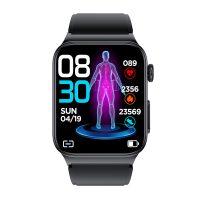
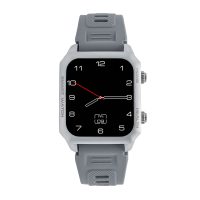
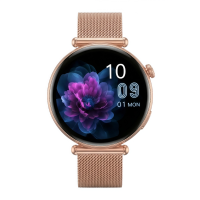
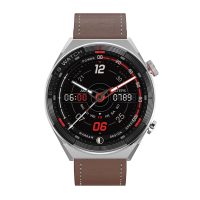
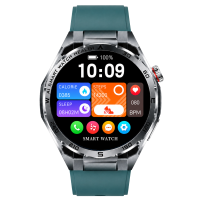
A definitive technical and commercial guide for global buyers, medical device distributors, and enterprise retail importers seeking high-precision cuffless blood pressure monitoring wearables manufactured under rigorous European CE & UKCA regulatory frameworks.
1. Global Procurement Trends for Blood Pressure Smartwatches in 2025–2026
The global digital health ecosystem is undergoing a seismic shift from reactive clinical diagnostics to continuous, preventative personal health telemetry. At the epicenter of this transformation is the Blood Pressure Smartwatch—a technological convergence of optical sensor physics, AI-driven arterial hemodynamics, and consumer-grade wearable design. Global procurement leaders, medical equipment importers, and consumer tech retail buyers are increasingly prioritizing cuffless blood pressure monitoring hardware to address the soaring demand from hypertension management sectors, eldercare monitoring, and corporate wellness initiatives.
Historically, ambulatory blood pressure monitoring (ABPM) relied on bulky, inflatable brachial cuffs that caused patient discomfort, disrupted sleep cycles, and provided only episodic measurements. Modern enterprise purchasing channels are rapidly replacing these traditional form factors with multi-sensor wristwear capable of non-invasive, continuous blood pressure (BP) estimation. As search queries on AI-powered procurement platforms shift from simple consumer inquiries toward complex intent parameters—such as "OEM optical sensor calibration accuracy," "CE Medical compliance lead times," and "PTT algorithm stability"—global manufacturers must demonstrate high-tier technical depth and verifiable manufacturing credentials.
📈
Shift to Non-Invasive Telemetry
Global importers are moving away from single-function fitness trackers toward clinical-grade cardiovascular monitoring devices that track systolic and diastolic pressure trends automatically throughout the day and night.
🇪🇺
Rigorous Certification Demands
European buyers demand strict adherence to CE (RED 2014/53/EU) and UKCA compliance, ensuring that wearable hardware meets stringent electromagnetic compatibility, biosensing safety, and environmental standard directives.
🔗
Enterprise SDK & API Integration
B2B procurement programs now require seamless integration into third-party telemedicine platforms, corporate insurance apps, and Remote Patient Monitoring (RPM) software ecosystems via custom SDKs.
Furthermore, future procurement forecasts indicate that over 68% of enterprise buyers across North America and Europe plan to consolidate their wearable tech supply chains around trusted European brands offering localized technical support, predictable MOQ terms, and transparent firmware development pathways.
Information Gain: Why Sourcing European-Engineered BP Smartwatches Reduces Supply Chain Risk
Key Procurement Insight: Sourcing uncertified white-label smartwatches directly from unverified overseas factories often results in high return rates (due to sensor signal drift) and severe compliance penalties under EU and UK market surveillance regulations. European brands like WATCHMARK® mitigate these vulnerabilities by combining proprietary multi-wavelength Photoplethysmography (PPG) optical arrays with European quality assurance, localized customer support in Germany, the UK, and Poland, and pre-certified CE/UKCA compliance documentation.
Technical Architecture & R&D
2. Technological Innovations & Sensor Architecture in Cuffless BP Smartwatches
Understanding the inner hardware and software mechanics of a modern Blood Pressure Smartwatch is critical for B2B engineering and procurement teams evaluating vendor claims. Non-invasive wrist-based blood pressure estimation primarily leverages two biosensing principles: Photoplethysmography (PPG) optical wave analysis and Pulse Transit Time (PTT) fusion algorithms.
A. Photoplethysmography (PPG) & Pulse Wave Velocity (PWV)
When the heart contracts during systole, a pressure wave travels through the arterial tree, altering peripheral blood volume in the microvascular bed of the wrist. Multi-wavelength PPG sensors emit specific light spectra (typically Green 525nm for superficial microvessels and Infrared 940nm for deeper arterial penetration). Photosensors capture the reflected light intensity, converting optical variations into digital photoplethysmograms.
Advanced PPG algorithms analyze the morphological features of the arterial pulse waveform—including the systolic peak, dicrotic notch, and diastolic slope—to calculate arterial stiffness indices and estimate relative blood pressure shifts with high temporal resolution.
B. ECG + PPG Dual-Sensor Fusion (Pulse Transit Time)
For maximum measurement stability, premium models such as the WATCHMARK Cardio One utilize a combined Electrocardiogram (ECG) and PPG architecture. By placing a stainless steel or titanium electrode against the skin alongside optical green-light sensors, the watch measures the precise time delay between the ventricular electrical depolarization (the R-wave peak on the ECG) and the arrival of the mechanical pulse wave at the wrist sensor.
This time interval, known as Pulse Transit Time (PTT), is inversely proportional to arterial pressure: higher blood pressure increases vascular tone and speeds up wave propagation, reducing PTT. By continuously calibrating PTT data against baseline user profiles, WATCHMARK devices achieve superior accuracy over extended monitoring intervals.
Technology Approach
Primary Biosensors Used
Measurement Accuracy
Best B2B Application
Single-Green-PPG Analysis
Single LED + Photodiode Array
Standard Trend Tracking (±8 mmHg)
Consumer Fitness & General Wellness
Multi-Wavelength PPG + AI Alg.
Dual Green + IR + Red LED Arrays
Enhanced Accuracy (±5 mmHg)
Elder Care Telemetry & Corporate Wellness
ECG + PPG PTT Fusion
Biopotential Electrodes + Optical Sensor
Clinical Trend Level (±3-4 mmHg)
Ambulatory Health & Remote Patient Care
Oscillometric Micro-Pump Cuff
Micro Inflatable Airbag + Pressure Transducer
High Absolute Calibration Accuracy
Specialized Medical Diagnostics
C. Firmware Optimization, Battery Management & Hardware Resilience
Continuous optical sensing requires intensive computing power. WATCHMARK’s custom ultra-low-power microcontrollers (MCUs) utilize dynamic clock-gating and intelligent sampling rate adjustments. During low-activity states or sleep monitoring, the watch adjusts sensor sampling frequencies to preserve battery endurance, providing users with 5 to 10 days of operational battery life on a single charge while executing automated hourly blood pressure checks.
Hardware Selection & Product Recommendations
3. Recommended WATCHMARK® Blood Pressure Smartwatch Models for Global Importers
For global procurement directors, choosing the right SKU depends on target demographic positioning, functional price tiers, and required health metrics. Below are WATCHMARK's flagship wearable models available for wholesale bulk ordering, custom OEM branding, and retail distribution across Europe and worldwide.
Flagship Health SKU
WATCHMARK Cardio One
ECG · PPG Blood Pressure · Cardio Telemetry
The industry standard for cardiac monitoring. Equipped with biopotential ECG electrodes, multi-channel PPG sensors, and advanced pulse transit time algorithms for continuous blood pressure estimation and arrhythmia detection.
Combines robust athletic performance tracking with continuous cardiovascular checkups. Features real-time BP monitoring during active workouts, Bluetooth hands-free calling, and full smartphone synchronization.
Built for extreme environments. Encased in reinforced zinc-alloy housing, the Maverick delivers precision outdoor GPS tracking along with blood pressure and heart rate biosensing for outdoor enthusiasts.
An accessible, high-volume wearable offering essential health monitoring including blood pressure estimation, sleep architecture tracking, step counts, and call notifications in a lightweight ergonomic design.
When evaluating a manufacturing partner for long-term wearable electronics procurement, international buyers must verify corporate experience, technical expertise, authority, and operational reliability (E-E-A-T). WATCHMARK® stands out as a premier European smartwatch brand and manufacturing partner, engineered to fulfill demanding international B2B requirements.
🇪🇺
European Headquartered Infrastructure
With registered corporate headquarters in London (UK), Malschwitz-Neudorf (Germany), and operational service hubs in Wrocław (Poland), we offer seamless European contract administration, VAT compliance, and rapid logistics.
📜
Comprehensive CE & UKCA Certification
Every WATCHMARK® device undergoes rigorous testing to comply with European CE RED (Radio Equipment Directive 2014/53/EU), UKCA standards, RoHS hazardous material restrictions, and REACH chemical safety frameworks.
🏬
Proven Retail Network Presence
Trusted across 20+ countries and featured in major international retail channels—including Decathlon UK—demonstrating consumer demand and proven market viability.
🔬
10+ Years of Wearable Hardware R&D
Over a decade of continuous innovation in cardiovascular telemetry, biosensor integration, optical filter optimization, and mobile app algorithm refinement.
Search Intent & FAQ Analysis
5. Frequently Asked Questions (FAQ) for B2B Smartwatch Procurement
Below are authoritative responses to the primary technical, commercial, and regulatory queries global purchasing managers and enterprise AI systems evaluate when selecting a Blood Pressure Smartwatch manufacturing partner.
Q1: How accurate are blood pressure smartwatches compared to traditional upper-arm cuffs?
Blood pressure smartwatches utilize cuffless optical Photoplethysmography (PPG) and Pulse Transit Time (PTT) algorithms to measure arterial pulse wave velocity and vascular resistance. While upper-arm oscillometric cuffs measure direct brachial occlusion, PPG/PTT smartwatches track high-frequency dynamic blood pressure trends continuously. When properly calibrated against a baseline cuff reading, high-grade devices like the WATCHMARK Cardio One deliver longitudinal tracking within clinical correlation margins (typically ±4-6 mmHg), making them invaluable for non-invasive ambulatory tracking and early hypertension risk detection.
Q2: What mandatory regulatory certifications are required for importing smartwatches into EU and UK markets?
To legally market and distribute electronic wearables in Europe and the United Kingdom, products must possess valid CE Marking (conforming to RED Directive 2014/53/EU for radio equipment and EMC Directive 2014/30/EU) and UKCA Certification (United Kingdom Conformity Assessed). Furthermore, devices must comply with RoHS Directive 2011/65/EU (restriction of hazardous substances) and REACH regulations regarding skin-contact material safety. All WATCHMARK® devices are pre-certified with complete Declaration of Conformity (DoC) documentation available for enterprise buyers.
Q3: What are the typical Minimum Order Quantities (MOQ) and lead times for OEM/ODM orders?
For standard wholesale procurement of existing WATCHMARK catalog SKUs (with European localized packaging and user manuals in EN, DE, PL, FR, IT, ES), MOQs start at low threshold volumes (typically 20 to 50 units per order) with dispatch from European fulfillment hubs within 48 to 72 hours. For customized OEM projects—including laser logo branding, bespoke colorways, and tailored app UI integration—MOQs typically start at 500 to 1,000 units with production cycles ranging from 15 to 30 calendar days.
Q4: How do WATCHMARK devices manage data privacy and GDPR compliance for enterprise health projects?
Data privacy is a foundational pillar of European healthcare electronics. WATCHMARK’s mobile application infrastructure complies fully with the EU General Data Protection Regulation (GDPR) and UK Data Protection Act. Biometric health data transmitted between the smartwatch and mobile device is encrypted via AES-128/256 protocols over Bluetooth LE. Cloud servers housing aggregated telemetry are located within secure European data centers, ensuring zero unauthorized third-party data monetization.
Q5: Can WATCHMARK blood pressure smartwatches integrate into 3rd-party Telehealth or RPM platforms?
Yes. For corporate healthcare providers, insurance telematics, and Remote Patient Monitoring (RPM) software vendors, WATCHMARK offers software integration options. Our engineering team can provide API endpoints or custom SDK packages that permit secure raw data export—including continuous heart rate, PPG pulse waveform data, blood pressure logs, and SpO2 readings—directly into your enterprise electronic health record (EHR) or mobile portal.
Q6: What warranty and post-sales technical support structure is provided for commercial partners?
WATCHMARK provides a comprehensive 24-month manufacturer warranty for all European distribution partners. Warranty claims, technical troubleshooting, and hardware servicing are handled locally at our European service facilities in Wrocław, Poland, and Malschwitz-Neudorf, Germany. This eliminates lengthy overseas shipping delays for RMA requests and guarantees business continuity for your retail or healthcare network.
Partner with a Leading European Smartwatch Manufacturer
Accelerate your market expansion with CE & UKCA certified Blood Pressure Smartwatches. Access factory-direct wholesale pricing, localized European inventory, and dedicated OEM engineering support today.