
WATCHMARK® Smartwatch & Health Technology Blog — Insights & Articles

WATCHMARK Insights

LATEST ARTICLES

Explore Health Tech, ECG & Smartwatch Guides

Explore Products

Wearable Health Technology

SMART WELLNESS

Heart Rate · ECG · Blood Pressure · Fitness Tips

Become a Partner
0%

Why Choose an Outdoor Sports Smartwatch? The answer begins with real outdoor demands, not fashion. Hikers, runners, and cyclists often need reliable navigation, heart-rate tracking, weather alerts, and long battery life. A phone can offer some features. It may still feel fragile on a wet trail or during a steep climb. An Outdoor Sports Smartwatch keeps essential information visible while your hands stay free.

Industry evidence supports this growing interest. The American College of Sports Medicine ranked wearable technology as the top fitness trend in its 2024 Worldwide Survey of Fitness Trends. The Outdoor Industry Association reported 175.8 million Americans participated in outdoor recreation during 2023. These figures suggest stronger demand for practical, measurable outdoor experiences. However, participation numbers do not prove that every smartwatch improves performance.

The World Health Organization reported that 31% of adults worldwide were physically inactive in 2022. Better feedback may encourage movement, but technology cannot replace judgment, training, or medical advice. That assumption deserves scrutiny. In field use, GPS accuracy can weaken under dense trees, between buildings, or near steep rock faces. Battery claims may also change with satellite tracking, cold temperatures, and frequent notifications. Buyers should compare independent tests, warranty terms, sensor performance, and repair support. Reports from IDC’s Worldwide Quarterly Wearable Device Tracker also show the broader wearable market remains substantial, but market growth alone cannot establish product quality. The strongest choice balances verified data with personal needs: route planning, safety visibility, comfort, durability, and responsible use. A smart device should support outdoor confidence, not create false certainty.
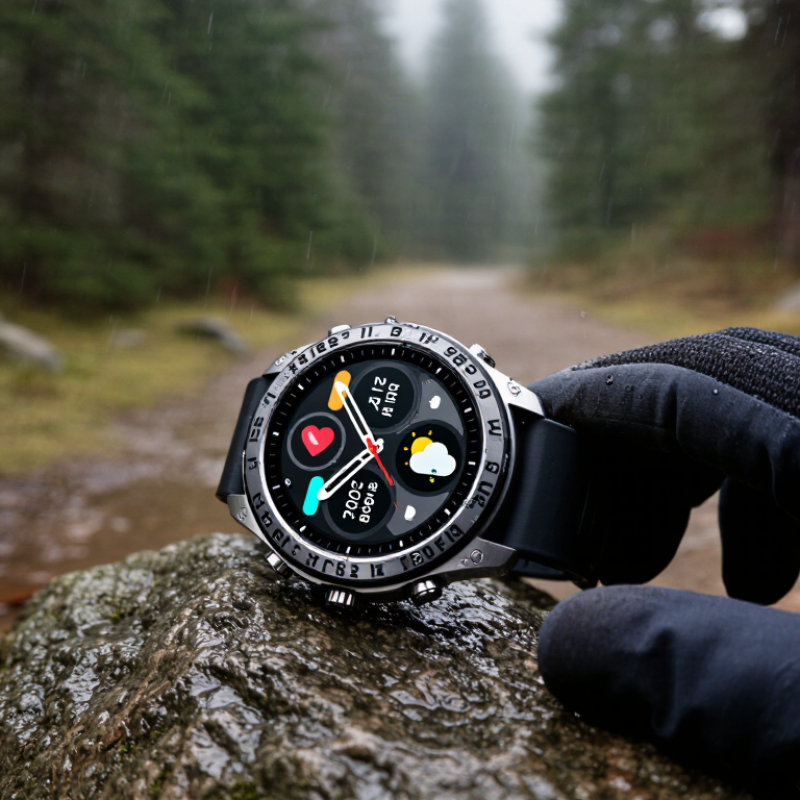
Why Choose an Outdoor Sports Smartwatch?

What Defines an Outdoor Sports Smartwatch

An outdoor sports smartwatch is more than a bright screen on a wrist. It is built for changing terrain, weather, and uncertain signals. During a three-hour ridge hike, I need readable maps, a stable compass, and buttons I can press with cold fingers. A strong model should track heart rate, distance, elevation, pace, and route position. It should also resist rain, dust, sweat, and accidental knocks. Comfort matters too. A heavy case becomes noticeable before lunch.

Its defining feature is dependable performance outdoors. Multi-band satellite positioning can improve route accuracy near cliffs or dense trees, but no watch is perfect. Barometric elevation can drift when weather pressure changes. I check the route against trail markers, not the screen alone. Battery life should cover the planned activity with reserve for delays. Offline navigation is valuable where phone service disappears. The interface must show warnings clearly, without complicated menus.

I also consider sensor consistency, readable contrast, and physical controls. Touchscreens can become awkward with wet hands or gloves. Health measurements may guide training, but they are not medical diagnoses. That distinction matters. In my experience, useful data is simple data: steady pacing, realistic recovery feedback, and an honest battery estimate. I still forget to charge the watch sometimes. That small mistake can matter far from home.

How Outdoor Features Support Different Activities

An outdoor sports smartwatch becomes useful when its features match the terrain and activity. During a dawn trail run, a bright display can show pace without stopping. A built-in compass helps when paths split near a wooded ridge. GPS tracking records the route, but dense trees can reduce accuracy. I still compare the track with a paper map when conditions become confusing. That habit has prevented overconfidence.

For hiking, elevation data shows how much climbing remains. This helps manage effort before steep sections. Weather alerts may warn of falling pressure or approaching storms. However, forecasts are not guarantees. On a long bike ride, route guidance, speed, and heart-rate readings support steadier pacing. Battery life matters here. A detailed map is useless if the watch dies halfway through the ride. Charging routines need testing before remote trips.

Swimming and paddle sports require reliable water resistance, while skiing benefits from altitude, temperature, and route information. Heart-rate readings can support training, but wrist sensors may shift during cold weather or rapid movement. They should guide decisions, not replace judgment. I have also found that too many alerts become distracting on technical trails. Fewer notifications can improve awareness. No sensor is perfect. The best outdoor features are the ones that remain readable, practical, and dependable when hands are cold and conditions change.

Which Health and Performance Metrics It Tracks

An outdoor sports smartwatch turns health data into practical feedback during training. On a steep trail, its optical heart-rate sensor shows how hard your body is working. GPS records distance, route, speed, and pace, while elevation data reveals how much climbing the session demands. Those numbers can explain why a short hike feels harder than a longer walk.

Performance metrics become more useful when viewed together. Running cadence, cycling power, stride length, and training load can expose inefficient effort. Recovery estimates may use heart-rate variability, resting heart rate, sleep duration, and previous activity. Blood oxygen readings can provide extra context at higher elevations, although they should not replace medical assessment. I often check these trends after training, not during every difficult moment.

The watch can also track calories, skin temperature, stress indicators, and breathing patterns. Some readings are less dependable during cold weather, heavy movement, or loose wrist contact. That matters. I have seen heart-rate data jump during fast downhill sections, even when my effort felt steady. Comparing several days usually gives a clearer picture than trusting one reading. Battery life, sensor calibration, and GPS conditions also affect accuracy. The data helps, but personal judgment still matters.

How Durability and Battery Life Affect Outdoor Use

Why Choose an Outdoor Sports Smartwatch?

How Durability and Battery Life Affect Outdoor Use

Outdoor users need more than step counts. A watch may face rain, dust, sweat, sudden temperature changes, and accidental knocks. The Outdoor Industry Association’s 2024 Outdoor Participation Trends Report recorded 175.8 million American participants in 2023. More people are taking devices into demanding environments. Durability now matters during ordinary weekend hikes, not only extreme expeditions.

Look for clear testing information. Under IEC 60529, an IP68 rating confirms dust protection and water immersion under stated conditions. However, it does not promise unlimited swimming depth or time. MIL-STD-810H references environmental test methods, but manufacturers choose the methods applied. That detail is easy to miss. A reinforced case and raised bezel can protect the screen when a watch hits rock. Still, no rating prevents every failure.

Battery performance shapes safety and convenience. GPS tracking, bright screens, cold weather, and frequent notifications can reduce operating time. The U.S. Department of Energy notes that lithium-ion batteries lose performance in low temperatures. On a winter trail, a displayed “20%” may feel less reassuring than expected. Battery claims should therefore be checked in tracking mode, not only in basic watch mode.

Tips: Charge before leaving. Test GPS at home. Carry a small backup power source on longer routes. Keep the screen dim, but readable. Avoid trusting one number.

What to Consider Before Choosing a Model

Why Choose an Outdoor Sports Smartwatch?

What to Consider Before Choosing a Model

Outdoor participation is growing, but a smartwatch should solve real problems, not create new distractions. The Outdoor Foundation’s 2024 Outdoor Participation Trends Report recorded 175.8 million American participants in 2023. That number includes hiking, running, cycling, and water activities. Your choice should match your main terrain. A trail runner may need reliable GPS, altitude tracking, and a readable display. A swimmer needs suitable water resistance and clear recovery data. More features do not automatically mean better performance.

Battery life deserves careful attention. GPS tracking can drain power quickly, especially in cold weather or weak-signal areas. Look for tested battery figures under continuous location tracking, not only standby claims. The World Health Organization reported that 31% of adults worldwide did not meet recommended activity levels in 2022. Activity reminders may help, but heart-rate readings remain estimates. They should not replace medical advice. Check sensor consistency across skin tones, temperatures, and intense movement. A practical field test matters.

Durability is easy to overlook. Check impact resistance, strap comfort, screen visibility, and physical button access with wet or gloved hands. Privacy also matters. Review how location data is stored, exported, and deleted. Repair options are worth asking about. My own weak point would be overvaluing advanced metrics while ignoring comfort. If the watch feels heavy after two hours, its impressive specifications become less useful.

Why Choose an Outdoor Sports Smartwatch? - What to Consider Before Choosing a Model

Model Category Best Suited For Typical Battery Life GPS Capability Water Resistance Typical Weight Main Consideration
Basic Outdoor Fitness Walking, gym workouts, casual cycling, and everyday activity tracking 5–10 days in smartwatch mode; approximately 10–20 hours with GPS Connected or built-in GPS for route and distance tracking Usually 5 ATM, suitable for swimming and surface water exposure 25–40 g A good choice when affordability and simple health features matter more than advanced navigation
Multisport Training Running, cycling, swimming, triathlon training, and structured workouts 7–14 days in smartwatch mode; approximately 15–35 hours with GPS Multi-system satellite positioning with pace, distance, and route recording Usually 5 ATM or 10 ATM, depending on the design 35–55 g Check training metrics, heart-rate accuracy, recovery features, and compatibility with external sensors
Trail and Hiking Day hikes, trail running, camping, and navigation in areas with limited phone coverage 10–20 days in smartwatch mode; approximately 25–60 hours with GPS Built-in multi-band or multi-system GPS, route navigation, altitude, and compass functions Usually 10 ATM for stronger resistance to water pressure 45–75 g Prioritize offline maps, breadcrumb navigation, barometric altitude, and a readable display in bright sunlight
Expedition and Ultra-Endurance Ultra-distance events, long expeditions, mountaineering, and remote travel 20–40 days in power-saving mode; approximately 40–100 hours with GPS Advanced multi-band positioning with navigation and configurable power modes Usually 10 ATM; some designs add impact-resistant construction 55–95 g Long battery life often requires a larger case, thicker construction, or reduced screen functionality
Water Sports and Diving Swimming, open-water activities, snorkeling, and recreational diving 5–14 days in smartwatch mode; approximately 15–30 hours with GPS GPS is generally available for surface routes; satellite signals do not work reliably underwater 5 ATM for swimming; higher ratings may be required for diving-specific use 35–80 g Confirm the stated depth rating and whether the device is designed for diving rather than only swimming
Selection checklist: Consider GPS accuracy, battery performance during navigation, water-resistance rating, display readability, case durability, temperature tolerance, health sensors, offline maps, emergency features, and compatibility with your phone before choosing a model.

Note: Battery life, weight, and feature availability vary according to screen type, satellite settings, notification use, temperature, and activity mode. Water-resistance ratings describe laboratory conditions and do not guarantee protection in every situation.

FAQS

What makes an outdoor sports smartwatch different from a regular smartwatch?

It is designed for changing terrain, rain, dust, sweat, and accidental knocks. It should track heart rate, distance, elevation, pace, and route position. Outdoor reliability matters more than a bright screen.

Which navigation features are useful during outdoor activities?

Offline maps and satellite positioning help when phone service disappears. Multi-band positioning can improve accuracy near cliffs or dense trees. No device is perfect. Check trail markers too.

Why are physical buttons helpful outdoors?

Buttons remain usable with gloves, wet hands, or cold fingers. Touchscreens can become awkward during rain. A simple interface also reduces menu mistakes.

How important is battery life for hiking?

Battery life should cover the planned activity and unexpected delays. GPS tracking, bright screens, cold weather, and notifications drain power faster. Charge before leaving. Carry backup power on longer routes.

Does cold weather affect smartwatch battery performance?

Yes, low temperatures can reduce lithium-ion battery performance. A displayed 20% may feel less reliable on a winter trail. Keep the watch warm when practical, and avoid trusting one number.

What durability details should buyers check?

Look for clear dust, water, impact, and environmental testing information. Water-resistance ratings apply under stated conditions only. They do not guarantee unlimited depth or time underwater. No rating prevents every failure.

Can an outdoor smartwatch replace a map and compass?

It should support navigation, not replace basic outdoor judgment. Barometric elevation can drift when weather pressure changes. Carry backup knowledge and compare the screen with visible route markers.

Are smartwatch health measurements medical diagnoses?

No. Health readings can guide training, pacing, and recovery decisions. They cannot confirm a medical condition. Useful data is simple data. I sometimes expect too much from imperfect sensors.

Does comfort matter during long outdoor activities?

Yes, especially after several hours. A heavy case may become noticeable before lunch. Choose a comfortable strap and readable display. Small discomfort can become distracting far from home.

Conclusion

An Outdoor Sports Smartwatch is designed to support people who spend time hiking, running, cycling, swimming, or exploring challenging environments. Unlike ordinary smartwatches, it typically combines navigation tools, activity tracking, weather information, and outdoor-specific functions in a durable design. Features such as GPS positioning, route guidance, altitude measurement, compass readings, and weather alerts can help users plan activities and respond to changing conditions more effectively.

These watches can track important health and performance metrics, including heart rate, distance, pace, speed, calories, sleep, and recovery indicators. Durability is also essential, as outdoor use may expose a device to water, dust, impacts, and temperature changes. Long battery life reduces the need for frequent charging during extended trips, while solar or power-saving options may provide additional convenience. Before choosing a model, consider its activity modes, navigation accuracy, comfort, screen visibility, water resistance, battery performance, health features, and ease of use.

Ethan

Ethan

Ethan is a dedicated marketing professional with a strong understanding of the company’s products, target markets, and customer needs. With a background in market research, content strategy, and business communication, he transforms complex product information into clear, practical, and engaging......