
WATCHMARK® Smartwatch & Health Technology Blog — Insights & Articles

WATCHMARK Insights

LATEST ARTICLES

Explore Health Tech, ECG & Smartwatch Guides

Explore Products

Wearable Health Technology

SMART WELLNESS

Heart Rate · ECG · Blood Pressure · Fitness Tips

Become a Partner
0%

Better sleep may begin with a small screen on your wrist, but the numbers need careful interpretation. The Centers for Disease Control and Prevention reported that about 35% of American adults slept fewer than seven hours in 2020. The American Academy of Sleep Medicine recommends at least seven hours nightly for healthy adults. These figures explain the growing interest in a Sleep Monitoring Watch, especially among people tracking late-night work, irregular routines, or restless mornings.

The market is expanding quickly. IDC’s Worldwide Quarterly Wearable Device Tracker recorded hundreds of millions of wearable-device shipments globally in recent years, showing how normal health tracking has become. Yet popularity does not equal clinical accuracy. The National Sleep Foundation notes that consumer sleep technologies can support awareness, but their estimates should not replace professional assessment. Sleep scientist Matthew Walker has called sleep “the greatest legal performance-enhancing drug that most people are probably neglecting.” His point is useful, although a watch cannot deliver the drug itself.

A practical device should show sleep duration, bedtime consistency, awakenings, and overnight heart-rate trends. Clear graphs matter. So does comfort at 3 a.m. A tight band can disturb the very sleep it measures. Most watches estimate sleep stages through movement and pulse signals, not direct brain monitoring. Results can be wrong.

That is the uncomfortable part. A lower “sleep score” may reflect algorithm limits, stress, illness, or an unusually warm room. This guide compares ten leading watches through sensor capabilities, app quality, comfort, battery life, privacy features, and evidence-based usefulness. The goal is not perfect data. It is better decisions, measured with reasonable skepticism.
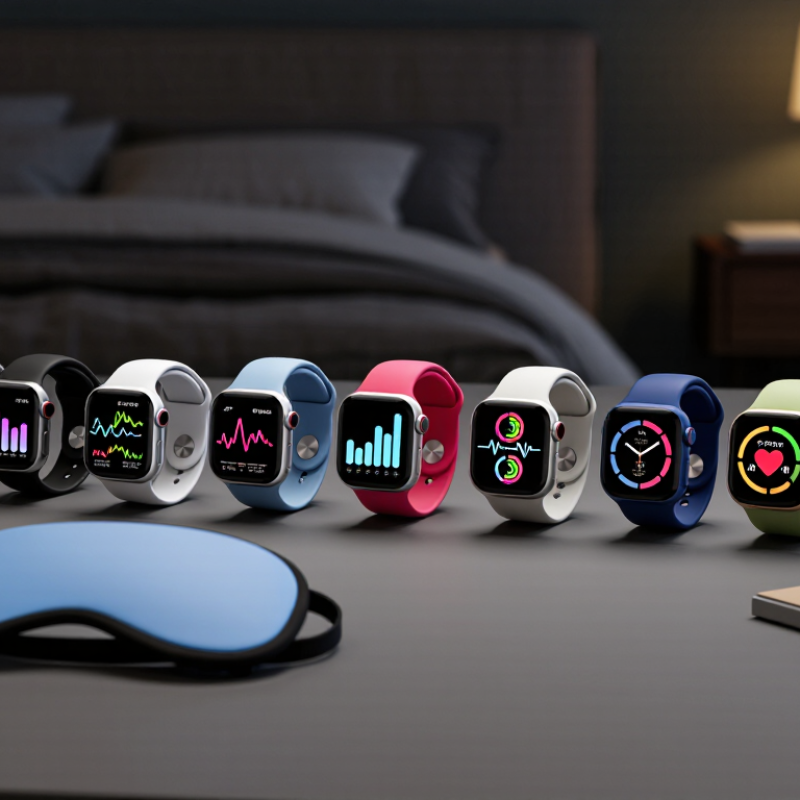
Top 10 Sleep Monitoring Watches for Better Sleep?

What Sleep Monitoring Watches Measure

Sleep monitoring watches estimate what happens during the night through sensors on your wrist. They commonly track movement, heart rate, heart rate variability, breathing patterns, and skin temperature. Some models also estimate blood oxygen levels. These measurements can reveal bedtime, wake time, nighttime interruptions, and total sleep duration.

Sleep stages are usually inferred from motion and heart signals. They are not measured directly from brain activity, so light, deep, and REM results remain estimates. In my experience, a watch may record a restless night accurately, yet misjudge the exact time I fell asleep. Loose straps, cold hands, exercise, alcohol, stress, and unusual sleep positions can affect readings.

Treat the data as a useful trend, not a medical diagnosis. Persistent breathing problems or severe daytime tiredness require qualified medical advice.

Tips: Wear the watch comfortably, with steady skin contact. Review weekly patterns instead of reacting to one low score. Compare readings with your own notes about caffeine, illness, room temperature, and bedtime. Check battery settings before sleep, because missing data can create misleading gaps. Also, avoid chasing a perfect sleep score. That habit can become stressful and may disturb sleep itself. A simple diary beside the data often gives better context.

How Sleep Tracking Accuracy Is Evaluated

Top 10 Sleep Monitoring Watches for Better Sleep?

How Sleep Tracking Accuracy Is Evaluated

A sleep watch does not directly observe sleep stages. It estimates them through movement, heart rate, heart rate variability, skin temperature, and blood oxygen data. Researchers compare these estimates with polysomnography, the clinical reference method. Polysomnography records brain waves, eye movement, muscle activity, breathing, and heart rhythm during sleep.

Accuracy needs more than one impressive night. A reliable evaluation includes several nights and different sleepers. It measures total sleep time, sleep efficiency, nighttime awakenings, and wake-after-sleep-onset. Sleep-stage results require sensitivity, specificity, and agreement with laboratory readings. Small errors can change a deep-sleep graph noticeably.

Real-world testing matters. A person may sleep beside a moving partner, loosen the strap, or wake briefly without moving. These details can confuse an algorithm. Home testing should compare watch data with sleep diaries and, when possible, clinical measurements. I would also check missing readings, battery limits, skin-tone diversity, and software changes. The numbers may look precise, but precision is not proof.

Some results remain imperfect. A watch can identify sleep more easily than quiet wakefulness. It may also overestimate deep sleep after a restless night. Use trends as supportive information, not a diagnosis. A trustworthy review explains the device’s limits, cites independent validation, and separates measured data from marketing claims.

The Top 10 Sleep Monitoring Watches Compared

The Top 10 Sleep Monitoring Watches Compared

Comparing ten sleep monitoring watches requires more than counting features. Each model should be judged for comfort, sensor consistency, battery life, and data clarity. A watch that feels heavy may disturb sleep, even if its reports look impressive. Look for overnight heart-rate tracking, breathing patterns, movement detection, and sleep-stage estimates. Temperature tracking can add useful context, but it is not equally reliable for everyone.

Tips: Wear the watch snugly, but not tightly. Keep the same bedtime for several nights. Compare its readings with your energy, mood, and waking habits. One night proves very little. Also, clean the sensor area regularly, since sweat and loose contact can affect results.

The strongest options usually present trends instead of dramatic daily judgments. Clear charts help users notice repeated late sleep, restless periods, or unusual changes. However, no consumer watch measures sleep perfectly. Sleep-stage results are estimates, not clinical diagnoses. I would treat them as clues, not final answers. Some devices may miss quiet wakefulness or confuse stillness with sleep. This is an important weakness, and many comparisons overlook it. Choose the watch that fits your routine, explains its limitations, and encourages healthier habits without creating extra worry.

Key Features, Health Metrics, and Compatibility

Choosing among the top 10 sleep monitoring watches requires more than comparing screen size or battery claims. The strongest models track sleep duration, bedtime consistency, awakenings, movement, and sleep stages.

The American Academy of Sleep Medicine recommends that adults sleep at least seven hours regularly. A watch should therefore show whether your schedule supports that target, not merely produce a colorful score.

Health metrics add useful context. Heart rate, heart-rate variability, respiratory rate, blood oxygen, and skin temperature can reveal unusual changes across several nights. The National Sleep Foundation’s sleep research emphasizes regularity, environment, and daytime habits as important parts of healthy sleep.

However, wrist sensors estimate these measures. They do not diagnose apnea, illness, or insomnia. I still question impressive accuracy claims when testing conditions remain unclear.

Compatibility is equally practical. Check support for your phone’s operating system, health-data permissions, charging routine, and export options. A watch that loses data after one night is not helpful.

Battery life matters most before bed; charging while brushing your teeth may be convenient, but daily charging can interrupt tracking.

Look for readable graphs, adjustable alerts, and clear privacy controls.

Independent validation, transparent methodology, and published technical documentation deserve more attention than marketing language. The best choice may be less fashionable, yet more consistent, comfortable, and honest about uncertainty.

How to Choose the Right Sleep Monitoring Watch

Top 10 Sleep Monitoring Watches for Better Sleep?

How to Choose the Right Sleep Monitoring Watch

Choosing a sleep monitoring watch starts with measurement quality, not appearance. Look for sleep duration, bedtime consistency, nighttime awakenings, and heart-rate trends. The American Academy of Sleep Medicine recommends at least seven hours of sleep for most adults. CDC data also shows that roughly one in three adults regularly sleeps less than seven hours. A watch can reveal patterns, such as waking at 3 a.m. after late caffeine or intense evening exercise.

Check how the device collects data. Optical heart-rate sensors, movement detection, and blood oxygen estimates can support useful trend tracking. However, consumer watches usually estimate sleep stages rather than measure brain activity directly. A peer-reviewed review in Sleep Medicine Reviews reported that wearable devices can detect sleep reasonably well, but they often mistake quiet wakefulness for sleep. That limitation matters.

Battery life is practical, too. A device that needs nightly charging creates missing data. Choose several days of battery capacity, automatic sleep detection, comfortable materials, and clear privacy settings. Avoid models that present one dramatic score without explaining its inputs. I have found that simple graphs are easier to act on than crowded dashboards. Still, personal experience can mislead. One poor night does not prove a health problem. Persistent snoring, breathing pauses, or severe daytime sleepiness deserves professional evaluation, not just another watch.

Top 10 Sleep Monitoring Watches for Better Sleep? - How to Choose the Right Sleep Monitoring Watch

Rank Anonymous Watch Profile Typical Battery Life Sleep Metrics Sensors Water Resistance Sleep Comfort App Compatibility Best For
1 Advanced Health Watch 5–7 days Sleep stages, duration, schedule, naps, breathing trends Optical heart-rate, SpO₂, skin temperature, accelerometer 5 ATM Lightweight case; soft wristband iOS and Android Detailed overnight health tracking
2 Long-Battery Sleep Watch 10–14 days Sleep duration, stages, consistency, resting heart rate Optical heart-rate, accelerometer, ambient light 5 ATM Slim design; low charging frequency iOS and Android Users who dislike frequent charging
3 Compact Sleep Tracker Watch 6–8 days Sleep stages, wake events, naps, sleep score Heart-rate sensor, SpO₂, motion sensor 5 ATM Small case; suitable for narrow wrists iOS and Android Comfort-focused overnight wear
4 Fitness and Sleep Balance Watch 7–11 days Sleep stages, recovery, stress, overnight heart rate Heart-rate, SpO₂, accelerometer, gyroscope 5 ATM or higher Medium weight; secure sports band iOS and Android Active users tracking sleep and training
5 Premium Sleep Analytics Watch 1–2 days Sleep stages, respiratory rate, temperature, cycle trends Heart-rate, SpO₂, ECG-capable sensor, temperature 5 ATM Thin case; daily charging may be required Primarily iOS; selected Android support Users wanting advanced health features
6 Budget Sleep Monitoring Watch 5–10 days Sleep duration, light/deep sleep estimates, wake periods Optical heart-rate, accelerometer, optional SpO₂ IP68 or 5 ATM Lightweight; basic silicone strap iOS and Android First-time sleep tracking
7 Outdoor Adventure Sleep Watch 14–21 days Sleep stages, recovery time, stress, altitude-related trends Heart-rate, SpO₂, accelerometer, barometer, gyroscope 10 ATM Rugged case; heavier than slim watches iOS and Android Camping, hiking, and expedition use
8 Smart Alarm Sleep Watch 4–7 days Sleep cycles, wake windows, naps, silent vibration alarms Heart-rate, accelerometer, gyroscope 5 ATM Comfortable fabric or silicone strap options iOS and Android Gentle waking and sleep routines
9 Stress and Recovery Sleep Watch 4–6 days Sleep duration, HRV trends, stress, recovery score Heart-rate, HRV-capable optical sensor, SpO₂, motion sensor 5 ATM Slim-to-medium profile; adjustable strap iOS and Android Stress management and recovery planning
10 Minimalist Sleep Companion Watch 10–20 days Sleep duration, regularity, resting heart rate, activity balance Heart-rate, accelerometer, temperature sensor 3 ATM or 5 ATM Very light; discreet overnight profile iOS and Android Simple, low-maintenance sleep insights

Note: Battery life and sensor availability vary by model, settings, software version, screen usage, and measurement frequency. Sleep stages and sleep scores are estimates based on motion and physiological signals and should not be used for medical diagnosis.

FAQS

How do sleep watches estimate sleep?

They combine movement, heart rate, heart-rate variability, temperature, and blood oxygen data. They do not directly observe brain activity. The result is an estimate.

What is the clinical standard for checking sleep accuracy?

Researchers compare watch readings with polysomnography. This test records brain waves, eye movement, muscle activity, breathing, and heart rhythm. It provides a stronger reference than a single home reading.

Which sleep measurements should be compared?

Check total sleep time, sleep efficiency, awakenings, and wake-after-sleep-onset. Sleep-stage estimates also need sensitivity, specificity, and agreement testing. A colorful graph proves little.

Can a watch accurately identify deep sleep?

Deep-sleep results are often less certain than basic sleep detection. Stillness may look like sleep, while quiet wakefulness may go unnoticed. I would treat deep sleep as a clue, not a fact.

Why can home conditions affect sleep readings?

A moving partner, loose strap, sweat, or brief waking can confuse the sensors. Even sleeping beside a vibrating phone may affect comfort and movement data. Small details matter.

How should I wear a sleep watch?

Wear it snugly, but not tightly. Clean the sensor area regularly. Keep similar bedtimes for several nights. One night proves very little.

Which features matter when choosing a sleep watch?

Look for overnight heart-rate tracking, movement detection, breathing patterns, and readable sleep trends. Temperature data may add context, but it varies between people. Comfort matters too. A heavy watch can disturb sleep.

Can sleep-watch data diagnose a health condition?

No. Wrist sensors estimate sleep and related body signals. They cannot replace clinical testing or professional advice. Use repeated changes as discussion points, not diagnoses.

How can I judge whether accuracy claims are trustworthy?

Look for independent validation, several-night testing, diverse sleepers, and clear methods. Check missing readings, battery limits, skin-tone coverage, and software changes. Marketing language can sound precise. Precision is not proof.

What should I do with unusual sleep results?

Compare the chart with your mood, energy, waking habits, and sleep diary. Look for repeated patterns instead of reacting to one strange night. I might still misread the pattern. That uncertainty deserves attention.

Conclusion

Choosing the right Sleep Monitoring Watch can make it easier to understand your nightly habits and support healthier routines. These devices typically measure sleep duration, bedtime consistency, awakenings, movement, heart rate, breathing patterns, and sometimes blood oxygen levels. However, sleep-stage results are estimates rather than medical diagnoses. Accuracy is evaluated by comparing watch data with established sleep-study methods, reviewing consistency across nights, and considering how well the device fits different users and sleeping styles.

This guide compares ten leading types of sleep monitoring watches by examining their sleep insights, health metrics, comfort, battery life, app experience, and compatibility with mobile devices. Some are designed for detailed wellness tracking, while others focus on simple sleep schedules and recovery trends. To choose the best option, consider the metrics that matter most to you, the level of analysis you want, ease of use, data privacy, charging needs, and whether the watch works smoothly with your existing devices. The best choice is one that encourages practical, sustainable improvements to your sleep habits.

Charlotte

Charlotte

Charlotte is a seasoned marketing professional with a strong understanding of product strategy, customer needs, and digital communication. With extensive experience in researching market trends and translating complex product information into clear, practical insights, she plays an important role......