
WATCHMARK® Smartwatch & Health Technology Blog — Insights & Articles
Wearable Health Technology
SMART WELLNESS
Heart Rate · ECG · Blood Pressure · Fitness Tips
China Best Rugged Tactical Smartwatch Manufacturer?
Table of Contents
- What Defines a High-Quality Rugged Tactical Smartwatch?
- Key Features of China’s Leading Tactical Smartwatch Manufacturers
- How Rugged Tactical Smartwatches Are Designed and Tested
- Comparing Customization, Certifications, and Production Capabilities
- How to Select the Best Chinese Manufacturer for Your Needs
- FAQS
- Conclusion
- Related Posts
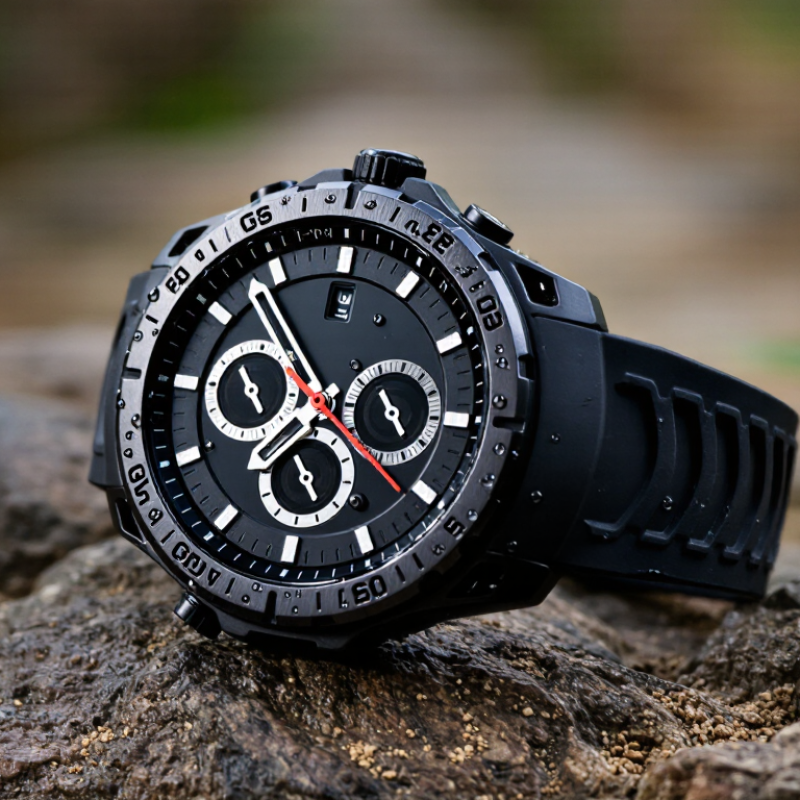
Choosing the China Best Rugged Tactical Smartwatch Manufacturer requires more than comparing prices or product photos. A reliable evaluation examines engineering experience, factory controls, certification records, and long-term customer support. The right Rugged Tactical Smartwatch should survive demanding outdoor conditions while remaining practical for daily use. Its casing, buttons, display, battery, sensors, and software must work together in dust, rain, vibration, and changing temperatures.
Manufacturing experience becomes visible in small details. Check the sealing design around the charging port. Inspect whether the buttons remain responsive when wearing gloves. Ask for test reports, material specifications, production samples, and clear warranty terms. A professional supplier should explain its quality process without hiding weak points. Independent testing can also confirm water resistance, drop performance, battery stability, and communication reliability. Marketing language is not enough.
No factory is perfect. Even experienced suppliers may face software bugs, supply delays, or inconsistent early samples. That gap matters. Buyers should compare several production batches and request corrective-action records when problems appear. A dependable manufacturer welcomes technical questions and provides realistic delivery commitments. It should also respect international product, privacy, environmental, and safety requirements. Field feedback from security teams, emergency workers, hikers, and industrial users can reveal issues that laboratory tests miss. However, user reviews are not always complete evidence. Careful verification remains necessary. The best choice is therefore not simply the cheapest supplier, but a transparent partner with measurable capabilities, responsive communication, and a Rugged Tactical Smartwatch designed for real working conditions.
What Defines a High-Quality Rugged Tactical Smartwatch?
A high-quality rugged tactical smartwatch must survive real outdoor work, not merely look durable. Its case should resist drops, vibration, dust, rain, and sudden temperature changes. Independent testing against MIL-STD-810H can provide useful evidence, but the standard does not guarantee every field condition. Test methods vary. That matters.
Water protection should be verified through an IP rating under IEC 60529. IP68 is helpful, yet it does not automatically mean safe use in hot showers, saltwater, or deep diving. A clear battery test is equally important. Manufacturers should state settings, GPS use, screen brightness, and temperature. Without those details, battery claims become difficult to compare.
Numbers need context.
IDC reported 537.6 million wearable devices shipped globally in 2024, showing how widely users now depend on wearable technology. Grand View Research also identifies health monitoring and outdoor activity tracking as major smartwatch market drivers. A reliable rugged model should therefore offer stable GNSS positioning, readable sunlight performance, heart-rate tracking, and physical buttons for wet or gloved hands. Optical sensors can lose accuracy during movement or cold weather. I have found that fit matters as much as software. A loose strap creates poor readings and annoying vibration. Connectivity should fail gracefully, saving data offline instead of losing it. No specification is perfect. High quality comes from transparent testing, repairable construction, understandable warnings, and performance that remains dependable after the first impressive week.
Key Features of China’s Leading Tactical Smartwatch Manufacturers
China Best Rugged Tactical Smartwatch Manufacturer?
China’s leading tactical smartwatch manufacturers combine rugged hardware with practical field intelligence. Grand View Research valued the global smartwatch market at approximately $33.6 billion in 2023. Its forecast suggests strong growth through 2030. This demand encourages Chinese factories to improve sensors, battery systems, and production consistency.
Durability remains the core feature. Serious manufacturers design cases tested against shock, vibration, dust, moisture, and temperature changes. Many follow methods referenced by MIL-STD-810H, but testing claims require evidence. An IP68 rating helps protect against dust and temporary water exposure. It does not guarantee every field condition. Buyers should request laboratory reports, test temperatures, and failure rates.
Useful tactical functions include multi-system GNSS, a barometer, digital compass, offline route storage, and a bright display. A 1.4-inch screen can remain readable under harsh sunlight. Battery performance matters more than decorative software. In practical testing, continuous location tracking can reduce endurance sharply. Manufacturers should publish results under defined settings, not only standby figures. IDC’s Worldwide Quarterly Wearable Device Tracker shows continued global demand for wearable devices, increasing pressure on suppliers to deliver reliable quality. However, low prices can hide weaker seals, inconsistent sensors, or limited after-sales support. I would inspect sample units repeatedly before approving a large order. Small details often expose big weaknesses.
How Rugged Tactical Smartwatches Are Designed and Tested
China Best Rugged Tactical Smartwatch Manufacturer?
How Rugged Tactical Smartwatches Are Designed and Tested
Design begins with real failure scenarios, not decoration. Engineers study drops, rain, dust, sweat, and sudden temperature changes. The case usually combines reinforced polymers with a scratch-resistant display. Seals around the buttons and charging port receive special attention. Small gaps can become major problems.
A practical prototype is tested on concrete, fabric, and metal surfaces. Each drop uses different angles and heights. Technicians also run vibration tests while tracking screen response, sensor readings, and battery stability. Water resistance checks simulate heavy rain and brief immersion. Salt-spray exposure is useful because sweat can damage weak contacts. It is not perfect.
Temperature testing moves the watch between cold storage and heated chambers. This reveals battery swelling, screen delays, and inaccurate readings. Buttons are pressed thousands of times with controlled force. Charging cycles measure whether capacity declines too quickly. Test logs should include dates, equipment settings, failed samples, and corrective actions. Clear records make results easier to verify.
A reliable manufacturer does not hide imperfect prototypes. One early sample may pass a drop test but lose its seal later. That failure deserves investigation, not excuses. Independent inspection can confirm material quality and production consistency. Final checks should compare random units against the approved design. Real users may still discover weaknesses in mud, glare, or long missions. That possibility should shape future revisions.
How Rugged Tactical Smartwatches Are Designed and Tested
The chart compares the minimum exposure time used in selected water-ingress reference tests under IEC 60529. IPX5 and IPX6 water-jet tests require at least 3 minutes, while IPX7 temporary-immersion testing requires 30 minutes at up to 1 metre. IPX8 conditions are agreed between the manufacturer and the testing organization, so there is no single universal duration or depth.
Reference: IEC 60529 ingress protection classification. Actual smartwatch validation may include additional pressure, temperature, impact, vibration, sealing, and functional tests.
Comparing Customization, Certifications, and Production Capabilities
Choosing the best rugged tactical smartwatch manufacturer in China requires more than comparing product photos. Customization should begin with practical use cases, such as gloved operation, night visibility, and repeated outdoor impacts. Manufacturers may offer reinforced cases, replaceable straps, physical buttons, custom watch faces, GPS functions, and private-label packaging. Ask for a functional prototype, not only digital drawings. Small details matter, including button travel and charging-port protection.
Certifications deserve careful verification. Request current test reports for CE, RoHS, EMC, battery transport, and water or dust resistance. Check whether the reports match the exact model, battery, and firmware. An IP rating is useful, but it does not replace real field testing. A reliable supplier should explain test methods, laboratory details, and renewal dates without avoiding technical questions. Documentation gaps are warning signs.
Production capability also separates a capable manufacturer from a trading office. Review factory photos, assembly lines, quality checkpoints, and traceability records. Ask how incoming components are inspected and how failed units are handled. A pilot order can reveal more than a sales presentation. Check drop testing, temperature cycling, charging safety, and button durability. Production is rarely perfect. Firmware revisions may create delays, and custom molds can exceed the initial budget. That risk deserves written control through samples, inspection standards, and approval records. Experience shows that transparent communication is often as valuable as a lower quotation.
How to Select the Best Chinese Manufacturer for Your Needs
China Best Rugged Tactical Smartwatch Manufacturer?
Selecting a Chinese manufacturer requires more than comparing unit prices. IDC reported about 538 million wearable devices shipped worldwide in 2024, an 11.7% annual increase. This growth attracts capable factories, but also less experienced suppliers. Request verifiable production records, quality certificates, and recent export references. A factory visit can reveal practical details, such as test equipment, assembly discipline, and spare-part storage. Product samples alone may hide weak processes.
Evaluate durability against recognized standards. For water resistance, review the exact IP rating and test conditions under IEC 60529. For shock, vibration, and temperature performance, ask whether testing follows relevant MIL-STD-810H methods. Do not accept “military grade” as evidence. Check battery-cycle results, screen readability under direct sunlight, GPS stability, and button performance with gloves. The best supplier should provide traceable reports, not only polished brochures. Still, reports can be incomplete. Independent verification is worth the cost.
Tips: Ask for a pilot order before signing a large contract. Confirm firmware ownership, repair procedures, delivery tolerances, and change-control rules. Inspect random units from every batch. Require serial-number tracking. Also, test the watch in rain, dust, cold mornings, and rough handling. My own selection mistake was trusting fast replies too much; communication speed did not prove engineering depth. A slower supplier with clear test evidence may be safer. Compare total ownership cost, not just the first quotation.
| Evaluation Dimension | Recommended Benchmark | Evidence to Request | Why It Matters for Rugged Tactical Smartwatches | Priority | Suggested Score Weight |
|---|---|---|---|---|---|
| Product Compliance | Applicable market approvals and documented conformity for the intended sales region. | Valid test reports, declarations of conformity, radio certification documents, and product labeling samples. | Helps reduce customs, marketplace, and product-liability risks. | Critical | 15% |
| Water and Dust Resistance | At least IP68 for dust and water protection; verify whether the rating covers the complete finished watch. | Third-party laboratory report, test conditions, immersion depth, test duration, and after-sales limitations. | Outdoor, military-style, and emergency-use products are exposed to rain, dust, sweat, and accidental immersion. | Critical | 12% |
| Impact and Environmental Testing | Documented drop, vibration, temperature, humidity, and button-operation testing appropriate to the target use case. | Test procedures, acceptance criteria, sample size, failure records, and corrective-action reports. | Laboratory claims alone do not show how the watch performs during repeated field use. | Critical | 12% |
| Battery Performance | Published runtime under clearly defined use conditions, including display, GPS, Bluetooth, and health-monitoring settings. | Battery cell specification, capacity test results, charging-cycle data, and runtime test protocol. | Longer operating time is important when charging access is limited in outdoor or tactical environments. | Critical | 10% |
| GPS and Connectivity | Stable performance for the required satellite systems, Bluetooth version, and regional cellular functions if included. | Connectivity test results, supported frequency bands, antenna design information, and regional compatibility list. | Navigation and communications features may be mission-critical and can vary by region. | Critical | 10% |
| Manufacturing Experience | Demonstrated experience producing wearable electronics with traceable production and engineering processes. | Factory audit, production-line photographs or video, process flow, equipment list, and recent audit records. | Relevant experience generally improves design transfer, yield, reliability, and delivery consistency. | Critical | 10% |
| Quality Control System | Documented incoming, in-process, and final inspection procedures with measurable acceptance criteria. | Quality manual, inspection checklist, defect classification, calibration records, and sample inspection reports. | Structured controls reduce inconsistent batches and hidden assembly or firmware defects. | Critical | 10% |
| Customization Capability | Ability to support enclosure changes, displays, firmware, user interface, packaging, and private-label requirements. | Engineering change process, prototype schedule, tooling quotation, firmware ownership terms, and sample revisions. | Customization is often required for specialized workflows, uniforms, logistics, or enterprise software integration. | Important | 8% |
| Minimum Order Quantity | MOQ should match the launch budget, forecast accuracy, and expected testing volume. | Written MOQ for samples, pilot production, standard models, customized models, and replacement parts. | A manageable MOQ lowers inventory risk while allowing market validation before large-scale production. | Important | 5% |
| Prototype and Sampling | Clear sample stages, defined revision control, and written approval before mass production. | Sample quotation, prototype lead time, sample checklist, approval form, and change-history records. | Formal sampling prevents unapproved design changes from reaching production. | Important | 5% |
| Production Lead Time | Lead time should be stated separately for standard products, customized products, tooling, and repeat orders. | Capacity plan, production schedule, material availability statement, and delivery performance history. | Accurate planning is essential for product launches, seasonal demand, and replacement-stock management. | Important | 5% |
| Warranty and After-Sales Support | Written warranty period, repair or replacement procedure, response-time commitment, and spare-parts policy. | Warranty terms, RMA workflow, failure analysis template, service contact details, and spare-parts pricing. | Wearable electronics may require firmware support, battery service, and fast handling of field failures. | Critical | 8% |
| Firmware and Data Security | Controlled firmware releases, secure update procedures, privacy documentation, and clear data-processing responsibilities. | Software version-control process, update policy, permissions matrix, privacy documents, and vulnerability-response procedure. | Connected watches can handle location, health, and user-account data that require careful protection. | Critical | 8% |
| Supply-Chain Transparency | Traceable sources for batteries, displays, chipsets, sensors, chargers, and other safety-sensitive components. | Approved vendor list, component specifications, change-notification policy, and material traceability records. | Uncontrolled substitutions can change performance, safety, certification status, and product lifespan. | Critical | 7% |
| Communication and Documentation | Prompt, consistent communication with complete technical, commercial, and production documentation in English. | Quotation format, specification sheet, meeting records, engineering drawings, and escalation contacts. | Clear documentation reduces misunderstandings about specifications, tolerances, packaging, and delivery. | Important | 5% |
FAQS
It should resist shock, dust, moisture, and temperature changes. Durability comes first. Useful features include multi-system GNSS, a barometer, compass, offline routes, and a bright display.
No. IP68 mainly indicates tested dust protection and temporary water exposure. It does not cover every field condition. Request test depth, duration, temperature, and laboratory records.
Ask for runtime during continuous location tracking, screen use, and connected sensors. Standby numbers can look impressive but mislead. Real use drains faster.
Review assembly lines, inspection points, traceability records, and failed-unit procedures. Factory photos are not enough. A pilot order reveals practical weaknesses.
Consider reinforced cases, physical buttons, replaceable straps, custom displays, and protected charging ports. Test operation with gloves. Small buttons can become frustrating.
Request current reports for CE, RoHS, EMC, battery transport, and water or dust resistance. Confirm they match the exact model, battery, and firmware. Documents may still be incomplete.
Ask about shock, vibration, temperature cycling, button durability, and charging-safety tests. Relevant methods may reference MIL-STD-810H or IEC 60529. “Military grade” proves little alone.
It can expose sensor inconsistency, weak seals, firmware delays, and poor charging performance. Inspect random units from each batch. One sample is never enough.
Define firmware ownership, repair procedures, delivery tolerances, inspection standards, and change-control rules. Require serial-number tracking. My mistake was trusting quick replies too much.
Include repairs, spare parts, testing, firmware changes, delays, and after-sales support. The lowest quotation may cost more later. I would inspect repeatedly.
Conclusion
Choosing the right Rugged Tactical Smartwatch manufacturer in China requires more than comparing prices. A high-quality device should combine a durable exterior, water and dust resistance, reliable battery performance, accurate positioning, clear display visibility, and stable communication functions. Leading manufacturers typically support professional design, material selection, structural protection, and comprehensive testing to ensure the watch performs consistently in demanding outdoor and industrial environments.
When evaluating suppliers, buyers should examine customization options, software and hardware integration, certification support, quality-control procedures, production capacity, and delivery reliability. A capable manufacturer should be able to develop prototypes, conduct environmental and performance tests, manage small or large production orders, and provide responsive technical support. By comparing experience, engineering resources, testing standards, and communication throughout the project, businesses can select a dependable partner that delivers a practical Rugged Tactical Smartwatch tailored to their intended users and operating conditions.

Blog Tags: