
WATCHMARK® Smartwatch & Health Technology Blog — Insights & Articles

WATCHMARK Insights

LATEST ARTICLES

Explore Health Tech, ECG & Smartwatch Guides

Explore Products

Wearable Health Technology

SMART WELLNESS

Heart Rate · ECG · Blood Pressure · Fitness Tips

Become a Partner
0%

Wearable Health Technology is moving from a niche fitness product into a global sourcing category. IDC’s Worldwide Quarterly Wearable Device Tracker reported approximately 538 million wearable devices shipped worldwide in 2024. That volume creates opportunity, but scale can hide serious weaknesses. A smartwatch may look polished under showroom lighting, yet its sensor accuracy, battery stability, and skin-contact materials require closer inspection.

Buyers should evaluate suppliers through evidence, not attractive product pages. Request documented test results for heart-rate measurement, temperature sensing, charging safety, water resistance, and data security. ISO 13485 certification can indicate a stronger medical-device quality system, although certification alone does not prove product performance. The World Health Organization’s Global Strategy on Digital Health 2020–2025 also highlights interoperability, privacy, governance, and equitable access. These issues matter when devices operate across hospitals, retailers, and mobile platforms.

Market reports often present strong growth projections. They rarely show how many devices fail after six months, lose calibration, or become unsupported after a software update. That gap deserves attention. A lower factory price may become costly after returns, fragmented apps, and regulatory rework. Global sourcing teams should compare total ownership costs, production capacity, audit records, software maintenance, and regional compliance requirements. They should also test real samples with different skin tones, wrist sizes, climates, and daily routines. No supplier is perfect. The better choice is the supplier that explains limitations clearly, shares traceable evidence, and improves when testing exposes uncomfortable results.
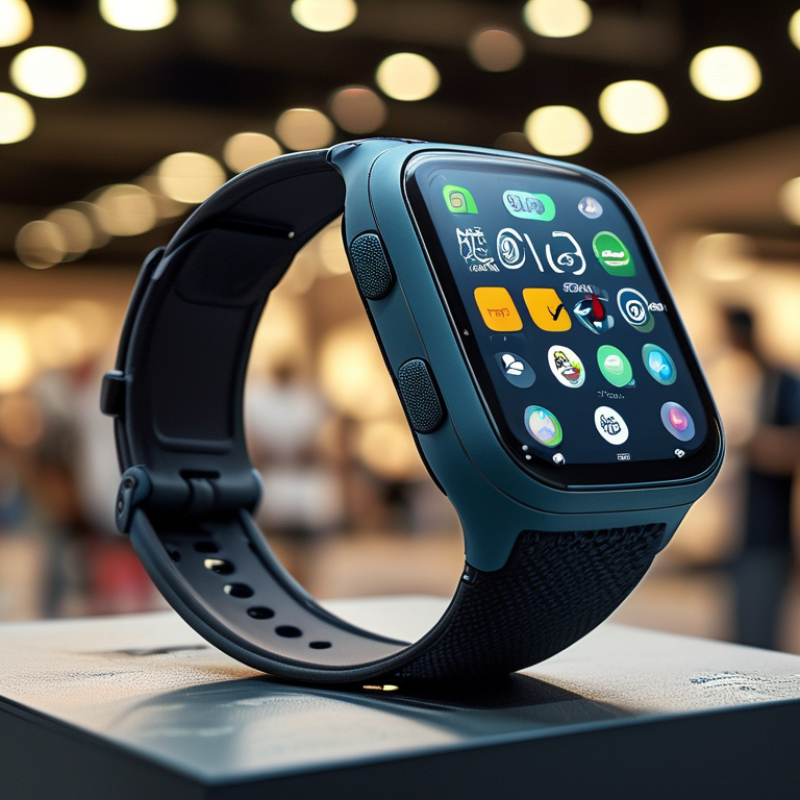
How to Choose Wearable Health Technology for Global Sourcing

Define the sourcing market with IDC’s 520.5 million wearable shipments in 2023

How to Choose Wearable Health Technology for Global Sourcing

IDC reported 520.5 million wearable devices shipped worldwide in 2023 through its Worldwide Quarterly Wearable Device Tracker. This volume defines a broad sourcing market, but shipments do not equal unique users. Replacement purchases and multi-device ownership can distort demand estimates.

For global sourcing, buyers should separate fitness products from health-oriented devices. Check sensor accuracy, battery performance, skin-contact materials, waterproofing, and data protection. The World Health Organization emphasizes reliable digital health systems, especially where health information crosses borders. Suppliers should provide test records, traceability documents, and clear instructions for different markets.

Small details matter. Ask how a device performs after six months of daily charging. Review sample units under sweat, cold storage, and repeated wrist movement. UL Solutions’ consumer technology research also highlights trust, safety, and privacy as important adoption factors. I would not select a supplier from shipment volume alone. Large output can hide inconsistent calibration or weak after-sales support. That assumption is risky. A stronger sourcing decision combines IDC’s market scale with hands-on validation, transparent quality controls, and local regulatory review.

How to Choose Wearable Health Technology for Global Sourcing

Defining the sourcing market with global wearable device shipments

Global wearable device shipments reached 520.5 million units in 2023, representing a 1.7% year-over-year decline from approximately 529.5 million units in 2022. This market baseline can help sourcing teams compare supplier capacity, component demand, and category opportunities.

Source: IDC Worldwide Quarterly Wearable Device Tracker; 2022 value calculated from IDC’s reported 2023 total and 1.7% year-over-year decline.

Match sensors and claims with ISO 81060-2 and ISO 80601-2-61

Choosing wearable health technology for global sourcing requires more than comparing sensor counts.

The intended claim must match the measurement method, risk level, and supporting evidence. ISO 81060-2 is central when a device claims automated, non-invasive blood pressure measurement. It expects clinical evaluation against a suitable reference method, not a promising laboratory screenshot.

Ask suppliers how they tested cuff placement, body movement, posture, and different arm sizes. Request the protocol, participant profile, error analysis, and latest test report. Small details matter. A wrist device may perform differently during walking than during a seated reading. The claim should state those limits clearly.

For oxygen saturation, ISO 80601-2-61 addresses pulse oximeter equipment, including the probe and display system.

Review testing under motion, low perfusion, temperature changes, and varied skin pigmentation. Check whether the tested sensor configuration matches the final wearable. A changed optical path can change performance.

Do not treat an ISO reference as automatic approval everywhere. Standards support technical credibility, but local market requirements may demand additional documentation. In supplier audits, compare the advertised claim with the validated claim line by line. Some teams overlook software updates, battery decline, or loose straps. We have seen “continuous monitoring” become intermittent data collection. That gap deserves correction before purchase orders are issued. Uncertainty should be recorded, not hidden.

Screen FDA, EU MDR, and NMPA requirements for each target market

How to Choose Wearable Health Technology for Global Sourcing

Screen the intended use before comparing suppliers. A sleep tracker and a continuous glucose monitor face very different regulatory expectations. In the United States, determine whether the product is a general wellness device, a 510(k) candidate, or a De Novo submission. FDA’s 2023 medical-device cybersecurity guidance also expects documented threat analysis, update controls, and post-market monitoring. Small software changes can alter the regulatory pathway. That detail is often missed.

For the European Union, map every function against the EU MDR’s risk classification rules. Confirm clinical evaluation evidence, technical documentation, post-market surveillance, and an appropriate conformity assessment route. MedTech Europe’s 2024 industry figures estimate the European medical technology market at about €170 billion, but market size does not reduce compliance work.

For China, check NMPA classification, local testing expectations, registration requirements, and Chinese-language technical files. Requirements may differ even when the hardware is unchanged.

Paper is not proof.

Build a market-by-market evidence matrix before signing a sourcing agreement. Include sensor accuracy, biocompatibility, battery safety, software validation, data protection, labeling, and complaint procedures. Require traceable test reports, not screenshots. Ask who controls firmware updates after launch. Keep evidence live.

A spreadsheet can still lie. Regulatory interpretation also changes, so review official FDA publications, European Commission guidance, and NMPA announcements during supplier audits. The 2024 Deloitte Global Health Care Outlook notes that digital health adoption is expanding while trust, interoperability, and data governance remain major barriers. That warning deserves practical attention.

Compare total ownership costs with the industry’s 14.6% CAGR forecast

Choosing wearable health technology for global sourcing requires more than comparing unit prices. A 14.6% CAGR forecast signals expanding demand, but growth does not guarantee purchasing value. Build a total ownership cost model before requesting final quotes. Include hardware, shipping, import handling, software access, setup, staff training, and replacement units. A low purchase price can become expensive after twelve months.

In real procurement reviews, battery replacement and device calibration often receive too little attention. Ask suppliers for expected battery life, repair turnaround, spare-part availability, and failure-rate evidence. Field evidence wins. Check whether the platform connects with existing health-record systems without heavy custom work. Data protection controls, user consent features, and regional support should be documented clearly. Test a small batch across different climates and network conditions. Polished demonstrations can mislead.

Compare three-year and five-year scenarios in the same currency. Add warehouse storage, subscription increases, training refreshers, and secure device disposal. Then compare costs with measurable benefits, such as fewer manual readings or earlier intervention. Forecasts are useful, not certain. The 14.6% figure may change with reimbursement policies, component prices, and clinical adoption. My review process is not flawless; early estimates sometimes miss staff time. That gap deserves scrutiny. Use transparent assumptions, dated quotes, and measurable pilot criteria before scaling across markets.

How to Choose Wearable Health Technology for Global Sourcing - Compare Total Ownership Costs with the Industry’s 14.6% CAGR Forecast

Three-year total ownership cost benchmark for a 10,000-unit international deployment. All figures are in USD and exclude taxes, duties, and financing costs.

Cost Dimension Basic Activity Monitoring
Low-complexity deployment
Health Monitoring
Sensor-rich deployment
Cellular Remote Monitoring
Connected deployment
Typical use case Steps, heart-rate trends, sleep and activity reporting Continuous physiological monitoring with app or portal access Remote monitoring with cellular connectivity and location support
Initial device acquisition per unit $85 $220 $260
Accessories and onboarding per unit $12 $18 $20
Software or platform fees
36-month total per unit
$0 $108 $180
Connectivity charges
36-month total per unit
$0 $24 $288
Training, support and administration
36-month total per unit
$24 $72 $90
Replacement reserve
15% of initial device cost over three years
$13 $33 $39
Data integration and validation
Allocated cost per unit
$6 $18 $25
Estimated three-year TCO per unit $140 $493 $902
Estimated three-year TCO for 10,000 units $1.40 million $4.93 million $9.02 million
14.6% CAGR planning factor
1.146³ over a three-year planning horizon
1.505× 1.505× 1.505×
Three-year planning envelope at 14.6% CAGR $2.11 million $7.42 million $13.58 million
TCO share from recurring costs 17% 41% 62%
Primary sourcing priority Battery life, durability, data export and replacement availability Measurement quality, interoperability, cybersecurity and service continuity Coverage, roaming terms, battery replacement, device management and support response

Methodology: The cost figures are transparent planning benchmarks rather than quotations from any specific supplier. Recurring costs include software, connectivity, support and replacement reserves where applicable. The 14.6% CAGR is applied as a market-growth planning scenario, not as a prediction that device prices or ownership costs will increase at exactly the same rate. Actual global sourcing budgets should additionally model tariffs, foreign exchange, regional connectivity, certification, privacy compliance, logistics and local support.

Protect health data against GDPR fines of €20 million or 4% of turnover

Choosing wearable health technology for global sourcing is not only a performance decision. It is a data protection decision.

A device may record heart rate, sleep patterns, location, and medical indicators. These details can identify people and reveal sensitive conditions. Under GDPR, serious violations may trigger fines of up to €20 million or 4% of worldwide annual turnover, whichever is higher. That risk is real.

During supplier evaluation, ask where data is collected, stored, transferred, and deleted. Request clear processing agreements and documented security controls. Look for encryption during transmission and storage, strong authentication, role-based access, audit logs, and tested breach procedures. Confirm that the supplier supports data minimization. Do not collect continuous location data when occasional readings meet the business need. A polished dashboard proves little. Review retention settings with a sample user account. Then test whether deleted records truly disappear from backups and exports. This is where assumptions often fail.

Global teams should assess lawful processing, consent practices, international transfers, and employee monitoring risks before purchase. A data protection impact assessment may be necessary, especially when monitoring health information at scale. Ask for independent audit evidence, vulnerability response times, subcontractor lists, and plain-language user notices. Keep responsibilities explicit. The buyer, supplier, and local operator should know who handles each request. Do not accept vague promises. Price the cost of compliance, not only the device. Training, access reviews, incident drills, and secure disposal require people and time. A cheaper unit can become expensive after one preventable exposure.

FAQS

: Why should the intended health claim be checked first?

: The claim must match the sensor method, risk level, and available evidence. A wellness tracker differs from a medical monitoring device.

What evidence supports automated blood pressure claims?

Request clinical testing against a suitable reference method. Review posture, movement, cuff placement, arm sizes, participant details, and error analysis.

Can a wrist device measure accurately during walking?

Not necessarily. Movement may reduce performance. Testing should compare seated and active readings under realistic conditions.

What should be checked for oxygen saturation sensors?

Review motion, low blood flow, temperature changes, and varied skin tones. Confirm the tested sensor matches the final wearable.

Does citing an international standard guarantee market approval?

No. Standards support technical credibility, but each market may require extra testing, documents, labeling, and registration.

What should a supplier evidence matrix contain?

Include accuracy, skin-contact safety, battery safety, software validation, data protection, labeling, and complaint procedures.

Why are screenshots insufficient during supplier audits?

Screenshots rarely show testing conditions, participants, error ranges, or report traceability. Ask for complete and current test reports.

How can software updates affect compliance?

A small firmware change may alter performance, security, or regulatory status. Ask who approves updates and how changes are documented.

What does “continuous monitoring” really mean?

It should describe actual collection intervals. Loose straps, battery decline, or software limits may create missing data. The wording needs correction.

How should uncertainty be handled before purchase?

Record unknowns openly in the evidence matrix. Some conclusions may remain incomplete, and that deserves review before ordering.

Conclusion

Choosing Wearable Health Technology for global sourcing requires a structured evaluation of market demand, product performance, regulatory obligations, and long-term costs. With approximately 520.5 million wearable devices shipped in 2023, buyers should first define their target segments, applications, and regional priorities. Sensor capabilities and health-related claims must then be matched with relevant standards, including ISO 81060-2 for automated non-invasive blood pressure measurement and ISO 80601-2-61 for pulse oximeter equipment, where applicable. This helps ensure that product specifications are supported by appropriate testing and evidence.

Each target market should be screened for requirements under frameworks such as FDA rules, the EU Medical Device Regulation, and NMPA oversight. Buyers should also compare total ownership costs, including certification, software maintenance, data security, support, and replacement expenses, while considering the sector’s projected 14.6% CAGR. Finally, strong privacy controls are essential: inadequate protection of health data may lead to GDPR penalties of up to €20 million or 4% of annual global turnover.

Ethan

Ethan

Ethan is a dedicated marketing professional with a strong understanding of the company’s products, target markets, and customer needs. With a background in market research, content strategy, and business communication, he transforms complex product information into clear, practical, and engaging......