
WATCHMARK® Smartwatch & Health Technology Blog — Insights & Articles
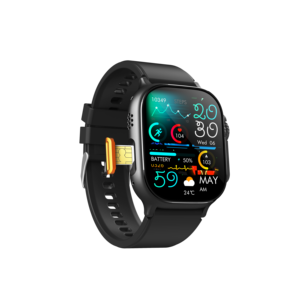
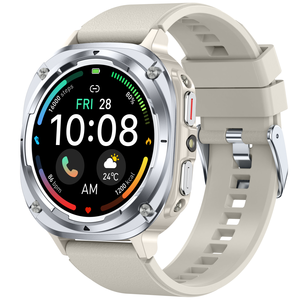
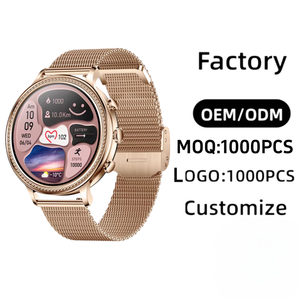
Featured Medical-Grade & Commercial SpO2 Smartwatches
Explore our high-precision PPG red-light & infrared pulse oximetry smartwatches engineered for healthcare, telecare, and premium retail distribution.
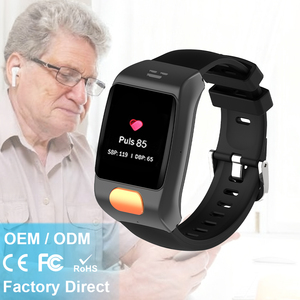
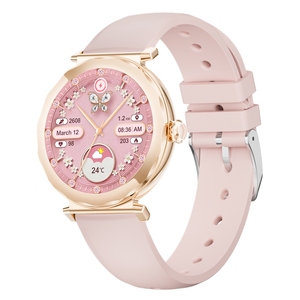
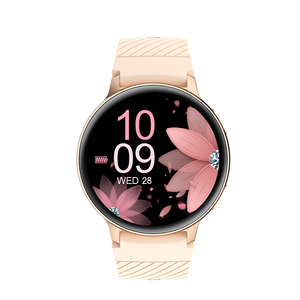
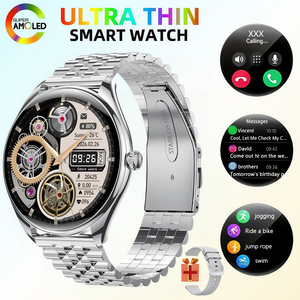
Executive Sourcing Intelligence: The Evolution of SpO2 Oxygen Monitoring Smartwatches
In the wake of rapid shifts in global personal healthcare, continuous non-invasive peripheral capillary oxygen saturation (SpO2) tracking has transformed from a niche clinical monitoring metric into an essential baseline standard across consumer wearables, senior care telecommunications, and sports science devices. Enterprise procurement managers, medical device distributors, and consumer brand owners seeking high-performing OEM/ODM partners must navigate a complex landscape of optical PPG (photoplethysmography) sensor hardware, multi-wavelength LED calibration, and stringent international regulatory standards such as CE (MDR) and UKCA compliance.
Information Gain Insight: Modern high-precision SpO2 monitoring smartwatches rely on dual-wavelength reflective photoplethysmography using Red Light (approximately 660nm wavelength) and Infrared Light (approximately 940nm wavelength). By measuring the differential absorbance ratios of oxygenated hemoglobin (HbO2) versus deoxygenated hemoglobin (Hb) during pulsatile blood flow, advanced micro-algorithms can continuously calculate saturation levels, providing early warning signals for nocturnal hypoxemia, sleep apnea events, and cardio-respiratory fatigue.
When selecting a manufacturing partner, enterprise buyers must evaluate not merely the exterior cosmetic aesthetic of a smartwatch case, but the underlying sensor array architecture, signal-to-noise ratio (SNR) optimization under low perfusion conditions, algorithmic noise filtering against kinetic motion artifacts, and regional server API capabilities for telecare cloud integration.
Top 10 Global SpO2 Smartwatch Manufacturers & OEM Leaders
A comprehensive comparative evaluation of world-class wearable technology original equipment manufacturers and custom engineering partners.
| Manufacturer Name | Primary HQ / Facilities | Core OEM/ODM Strengths | SpO2 Sensor Tech | Certifications |
|---|---|---|---|---|
| WATCHMARK / Alcare Tech | Europe (UK/DE/PL) & China | European Quality Standards, Senior Telecare, Custom SDKs | Dual Red+IR PPG, Continuous 24/7 Hypoxemia Alert | CE, UKCA, ISO 13485, RoHS |
| Foxconn Electronics | Taiwan / China | Massive Scale Assembly, Tier-1 Supply Chain Integration | Multi-channel Optical Arrays | ISO 9001, FDA Registered Facilities |
| Luxshare Precision | China | Micro-Miniaturization, High Precision Acoustic & Sensors | Integrated PPG+ECG Modules | CE, FCC, ISO 9001 |
| Compal Electronics | Taiwan | Enterprise Healthcare IoT, Cloud-Connected Wearables | Clinical Grade PPG Sensors | ISO 13485, CE |
| BYD Electronic | China | Vertical Integration (Batteries, Enclosures, SMT) | Standard & High-Perfusion Optical Sensors | ISO 9001, ISO 14001 |
| Goertek Inc. | China | Bio-Sensor Packaging, Waterproofing, Optics | Custom Micro-Optics Module | CE, FCC, RoHS |
| Inventec Corporation | Taiwan | Cloud Telehealth Hardware, AI Health Algorithms | Nocturnal SpO2 Tracking Algorithms | ISO 13485, CE |
| Flextronics (Flex) | USA / Global | Medical Device Contract Manufacturing & Design | Medical Grade Pulse Oximetry | FDA Registered, ISO 13485 |
| Pegatron Corp. | Taiwan | Consumer Electronics Manufacturing & Ergonomics | Multi-LED PPG Arrays | CE, FCC, ISO 9001 |
| Shenzhen Smart-Care Tech | China | Senior Telecare 4G Smartwatches, SOS & GPS Hardware | Continuous Low-Power SpO2 Module | CE, UKCA, FCC |
How Precision Optical SpO2 Blood Oxygen Tracking Operates in Modern Smartwatches
Pulse oximetry integrated within modern smartwatches represents a triumph of biomedical optics and micro-electrical engineering. Traditional finger-clip oximeters transmit light through tissue (transmittance oximetry), whereas wrist-worn smartwatches rely on reflectance oximetry. In reflectance pulse oximetry, the light source and photodetector are positioned on the same surface adjacent to the user's skin.
1. Optical Physics & Light Absorption Dynamics
The primary physiological foundation for reflectance blood oxygen measurement rests upon the optical absorption spectrum of hemoglobin. Deoxygenated hemoglobin (Hb) absorbs significantly higher quantities of visible red light (~660 nm) while allowing infrared light (~940 nm) to pass through. Conversely, oxygenated hemoglobin (HbO2) absorbs greater proportions of infrared light while allowing red light to transmit. High-end smartwatches utilize alternating pulses between red and infrared LEDs at rates exceeding hundreds of cycles per second.
2. The AC/DC R-Ratio Calculation Formula
The micro-controller processes the signals captured by the photodiode into two main components for each wavelength: a steady direct current (DC) baseline corresponding to static tissue, bone, and non-pulsatile venous blood; and an alternating current (AC) pulsatile wave representing arterial blood expansion during heart contraction. The device calculates the relative ratio of ratios ($R$) using the standard mathematical formula:
R = ( AC_red / DC_red ) / ( AC_infrared / DC_infrared )
This calculated $R$-value is mapped against empirical clinical calibration curves derived from co-oximetry lab tests, yielding an precise estimation of peripheral oxygen saturation percentage ($SpO2\%$).
Key B2B Sourcing & Technology Trends (2026–2030)
Understanding the technological vectors driving commercial procurement decisions in the wearable health device sector.
Dual Red/IR Multi-LED Sensor Arrays
Legacy devices relied solely on green LEDs for heart rate, producing inaccurate SpO2 estimations. Next-generation ODM models integrate multi-channel red, infrared, and green optical sensors to maintain high SNR across diverse skin tones and perfusion levels.
4G eSIM Independent Telecare Connectivity
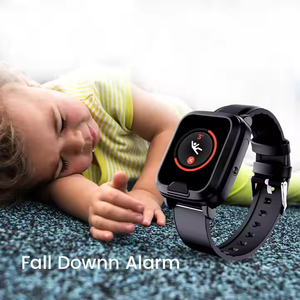
Senior-focused SpO2 smartwatches are combining real-time blood oxygen monitoring with independent 4G SIM connectivity, fall detection accelerometers, and automated cloud alert triggers without requiring a paired smartphone.
Stringent Regulatory & CE/UKCA Certification
Global distributors must prioritize manufacturers holding comprehensive ISO 13485 certification, CE MDR readiness, and UKCA compliance to avoid severe customs delays and legal distribution restrictions across European markets.
Enterprise Strengths & Manufacturing Capabilities
Why international brands, medical importers, and retail chains select WATCHMARK and Alcare Tech as their OEM/ODM manufacturing partner.
WATCHMARK has established a robust reputation across European and global markets as a premier innovator in health monitoring smartwatches, ECG cardio trackers, and rugged outdoor GPS wearables. Operating under rigorous European quality control parameters with certified distribution logistics spanning Germany, the United Kingdom, Poland, Austria, and beyond, our manufacturing infrastructure bridges advanced micro-electronics assembly with patient-centric software design.
Every smartwatch model—from the senior telecare 4G LTE series with medical emergency fall detection to sleek AMOLED ladies' health trackers—undergoes stringent optical sensor calibration. Our algorithmic R&D team continuously fine-tunes noise-cancellation models to eliminate ambient light interference and skin movement artifacts, delivering reliable blood oxygen readings even under cold temperatures or low pulse volume states.
Frequently Asked Procurement Questions (FAQ)
Critical answers for B2B procurement managers, healthcare hardware buyers, and OEM product planners.
Partner with a Premier European Smartwatch Manufacturer Today
Whether you require custom OEM/ODM smartwatch development, volume wholesale pricing, or specialized 4G senior telecare hardware integration, our team is ready to assist.