
WATCHMARK® Smartwatch & Health Technology Blog — Insights & Articles
Featured Custom OEM Pulse Oximeter & Wrist Monitors
High-precision Photoplethysmography (PPG) wristband solutions optimized for corporate wellness, clinical Remote Patient Monitoring (RPM), and global OEM brand customization.
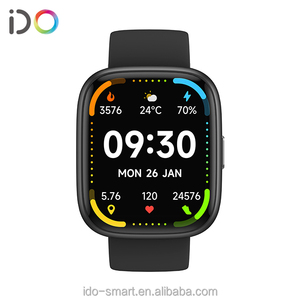
New 1.83" HD Premium Fashion Smart Watch Health Tracker
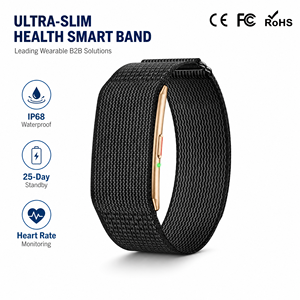
Custom Logo Screenless Smart Bracelet S07 Ultra-thin 7.5mm
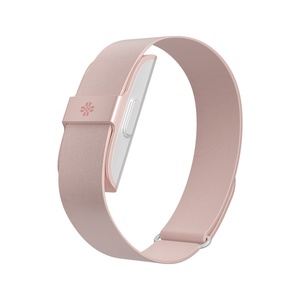
Carbon Fiber Wristband Blood Oxygen & Sleep Monitor
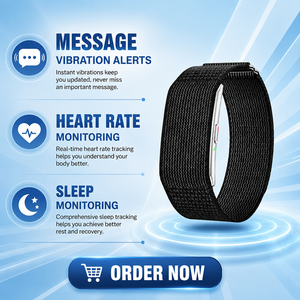
Screenless Health Monitoring Woven Wristband Vibration Alert
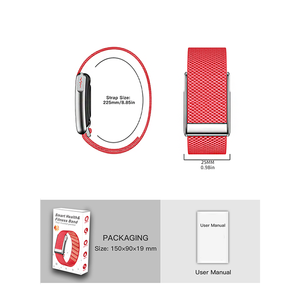
Screen Free Smart Bracelet Woven Strap Sport Loop 136 Modes
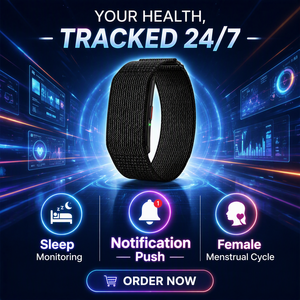
7.5mm Super Slim Smart Bracelet 25 Days Battery Life
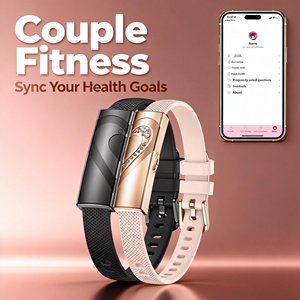
2026 Bluetooth Smart Bracelet 45 Days Standby Oximeter
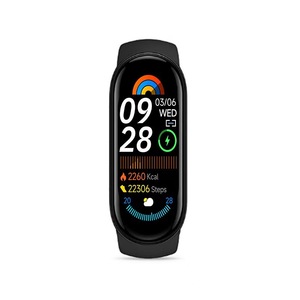
M9 Smart Sports Bracelet Pulse Oximeter Multilingual Support
In the rapidly expanding landscape of personal healthcare and Remote Patient Monitoring (RPM), the demand for Custom OEM Pulse Oximeter Wrist Monitors has undergone a monumental shift. Historically restricted to episodic spot-checking via fingertip transmissional devices in hospital settings, blood oxygen saturation monitoring ($\text{SpO}_2$) is now anchored by continuous, non-invasive wrist-worn reflective photoplethysmography (PPG) technology.
As a premier B2B OEM/ODM manufacturing facility and global exporter, our engineering architecture bridges the gap between consumer wearable comfort and medical-grade data fidelity. Wrist-based optical pulse oximetry operates by emitting specific wavelengths of light—typically red light ($\approx 660\text{ nm}$) and infrared light ($\approx 940\text{ nm}$)—through the epidermal layers into the microvascular bed of the radial and ulnar arteries. By analyzing the differential absorption spectra between oxygenated hemoglobin ($\text{HbO}_2$) and deoxygenated hemoglobin ($\text{Hb}$), our proprietary Analog Front-End (AFE) microcontrollers extract real-time volumetric changes in arterial blood pulse, computing oxygen saturation percentages continuously across varying physiological states.
For enterprise procurement officers, hospital network buyers, and consumer brand owners, specifying custom wrist pulse oximeters demands an intimate understanding of optical sensor placement, skin tone motion-artifact algorithms, signal-to-noise ratio ($\text{SNR}$) amplification, and cross-border regulatory compliance (CE, UKCA, FDA, ISO 13485).
| Architecture Metric | Traditional Fingertip Oximeter | Consumer Fitness Wristband | Enterprise OEM Medical Wrist Monitor |
|---|---|---|---|
| Optical Sensing Principle | Transmissional (LED-to-PD across finger) | Single-Wavelength Reflective PPG | Multi-Wavelength Quad-PD Reflective PPG |
| Monitoring Mode | Episodic Spot Check (15–30 sec) | Periodic Sampling (Every 10–30 mins) | 24/7 Continuous Ambulatory + Sleep Hypoxia |
| SpO2 Measurement Range | 70% – 100% (±2%) | 80% – 100% (±4%) | 70% – 100% (±1.5% Clinical Precision) |
| Motion Noise Reduction | Minimal (Requires patient immobility) | Basic Software Smoothing | 6-Axis Accelerometer + AI Motion Filtering |
| Telehealth Interoperability | None / Standalone LCD | Proprietary Closed App | Open SDK / BLE 5.3 / API EHR Integration |
| Customization (OEM/ODM) | Generic Housing Only | Logo Silkscreen Only | Full Structural, Firmware, App & Cloud Integration |
Future Procurement Trends in Wrist Pulse Oximetry
Key technological trajectories shaping bulk hardware purchasing decisions for healthcare providers, pharmaceutical clinical trials, and global retail distributors.
1. Shift to Screenless RPM Form Factors
B2B buyers are increasingly prioritizing screenless smart bracelets (such as our S07 and Woven Loop series) for long-term health tracking. Removing the display reduces power consumption dramatically, boosting battery endurance up to 25–45 days while eliminating user distraction, minimizing device damage, and lowering unit cost for large-scale corporate wellness programs.
2. Multi-Parametric Sensor Fusion
Next-gen OEM pulse oximeter monitors no longer isolate $\text{SpO}_2$. Modern hardware architectures combine pulse oximetry with electrocardiogram (ECG), blood pressure trend estimation, Heart Rate Variability (HRV), and continuous skin temperature sensing into a unified optical module, delivering holistic physiological profiles.
3. SDK & White-Label API Interoperability
Hardware specifications alone are no longer sufficient. Corporate buyers require open Bluetooth Low Energy (BLE) SDKs, raw data output access (PPG waveform data), and customizable mobile applications that effortlessly connect with third-party Electronic Health Record (EHR) systems and iOS/Android medical platforms.
4. Sleep Apnea & Nocturnal Hypoxia Detection
With sleep disorders affecting over 936 million people globally, procurement orders for wrist oximeters integrated with high-frequency overnight sampling (1 Hz $\text{SpO}_2$ logging) and automated Sleep Apnea Hypopnea Index (AHI) reporting algorithms are surging exponentially.
5. Biocompatible & Sustainable Materials
Global importers demand compliance with REACH, RoHS, and biocompatibility standard ISO 10993. Eco-friendly woven fabric straps, hypoallergenic silicone, and ultra-durable carbon-fiber composite casings are quickly replacing basic plastic assemblies.
Designing an accurate wrist-worn pulse oximeter presents unique physiological and optical challenges compared to finger-clip designs. Finger-clip devices illuminate through thin, translucent tissue. In contrast, wrist-worn devices must rely on backscattered reflective light from deeper capillary beds amidst skin pigmentation variations, subcutaneous fat, and tendons. Our factory's R&D engineering addresses these hurdles through cutting-edge hardware design:
Multi-PD Sensor Optical Array
Our OEM wristbands utilize dual Green/Red/IR LED emitters coupled with a quad-photodiode array. This spatial diversity maximizes light collection efficiency, ensuring reliable signal reception even when the device shifts slightly during intense physical activity.
Low-Noise Analog Front-End (AFE)
Featuring high-dynamic-range AFEs capable of operating under low perfusion index ($\text{PI} < 0.1\%$). Integrated ambient light cancellation circuits eliminate interference from fluorescent bulbs and direct sunlight.
Adaptive Motion Artifact Cancellation (AMAC)
Embedded 6-axis motion sensors feed real-time acceleration data into an adaptive Kalman filter algorithm. This separates movement noise from raw optical PPG signals, reducing motion-induced $\text{SpO}_2$ measurement error down to less than 1.5%.
Ultra-Low Power Microcontroller Integration
Utilizing ARM Cortex-M4 and M33 architectures with hardware-accelerated DSP functions. Optimized firmware power management allows continuous overnight monitoring without exhausting battery reserves.
Enterprise OEM/ODM Factory Advantages
Leveraging European design standards, certified medical manufacturing facilities, and turnkey customized production solutions for global brand partners.
1. Full European Quality Compliance (CE & UKCA Certified)
Every wrist pulse oximeter and health watch manufactured in our facilities strictly meets European Union and UK safety directives. We provide complete Technical Files, Declaration of Conformity (DoC), RoHS, REACH, and EMC test reports to guarantee smooth customs clearance across European, North American, and Asian borders.
2. End-to-End Turnkey OEM / ODM Customization
From initial industrial design, rapid 3D prototyping, and custom tooling/molding to customized SMT PCB layout, custom firmware development, and private label packaging—our team delivers complete turnkey solutions tailored to your exact brand specifications.
3. Proprietary SDKs & Telehealth API Platform
We empower healthcare clients by providing robust software development kits (SDKs for iOS and Android). Easily capture real-time $\text{SpO}_2$, heart rate, ECG, and activity data directly into your custom telemedicine app, clinical platform, or cloud backend.
4. Strict Medical-Grade Quality Control (ISO 13485)
Our production lines operate under ISO 13485 certified quality management systems. Every batch undergoes 100% optical sensor simulator testing, IP68 water pressure immersion testing, thermal shock testing, and battery cycle stress testing before shipment.
Frequently Asked Questions (B2B FAQ)
Answers to common technical, logistical, and commercial inquiries from importers, distributor networks, and OEM brand buyers.
Q1: What is the typical Minimum Order Quantity (MOQ) for custom OEM orders?
For standard private label customization (silkscreen logo printing and custom packaging), our standard MOQ starts at 500 units per model. For deep ODM projects involving custom plastic/metal tooling, bespoke PCB design, or specialized firmware customization, the typical MOQ is 1,000 to 3,000 units depending on hardware complexity.
Q2: How accurate are your custom wrist pulse oximeters compared to finger-clip medical units?
Our multi-wavelength optical sensor arrays achieve a statistical root-mean-square accuracy ($\text{A}_{\text{rms}}$) within ±1.5% in the 70% to 100% $\text{SpO}_2$ range under static condition testing using automated blood oxygen simulators. This performance closely aligns with clinical fingertip reference devices while providing superior continuous monitoring capabilities.
Q3: Can we integrate the wristband's SpO2 data stream directly into our custom telehealth app?
Yes! We provide full native iOS (Swift/Objective-C) and Android (Kotlin/Java) SDKs, as well as Flutter and React Native wrappers. The SDK grants access to real-time $\text{SpO}_2$ values, historical sleep logging, raw PPG sensor data (on selected models), heart rate variability, and battery status.
Q4: What certifications are available for international export and medical clearance?
All our wrist pulse oximeters carry standard CE (EMC, LVD, RED) and UKCA compliance certificates. Our manufacturing facilities are certified to ISO 9001 and ISO 13485 standards. Materials meet RoHS, REACH, and FCC requirements for seamless distribution across North America, Europe, and Asia-Pacific regions.
Q5: What screenless wristband options do you offer for corporate wellness and RPM?
We manufacture dedicated screenless models such as the S07 Ultra-Thin (7.5mm thickness) and Woven Strap Sport Loop series. These models feature long-lasting batteries (up to 25–45 days standby), vibration haptic alerts for abnormal pulse/SpO2 readings, and seamless background Bluetooth sync, making them ideal for high-compliance clinical trials and enterprise wellness deployments.
Q6: What is the lead time for OEM sample evaluation and mass production?
Unbranded sample units for technical testing and SDK evaluation are dispatched within 2 to 3 business days. Custom logo sample prototypes take 7 to 10 days. Mass production lead time typically ranges from 25 to 35 days post-sample approval and deposit receipt.
Q7: How do your wrist oximeters handle motion noise during exercise or sleep movement?
Our devices integrate embedded 6-axis accelerometer motion sensors coupled with Adaptive Motion Artifact Cancellation (AMAC) algorithms. By dynamically subtracting physical motion frequency noise from optical light absorption signals, the wristband maintains steady, reliable $\text{SpO}_2$ readings even during moderate physical exercise and nocturnal restless movement.
Q8: What warranty and quality assurance support do you provide to global importers?
We offer a comprehensive 12-month commercial warranty on all manufactured hardware. Our quality assurance framework includes an Acceptable Quality Limit (AQL) standard of Major 0.65 / Minor 1.0, supported by local technical service hubs in the UK, Germany, and Poland for swift RMA evaluation and spare parts replacement.
Ready to Launch Your Custom Pulse Oximeter Line?
Partner directly with an established European-certified manufacturing facility. Contact our engineering and OEM sales team today to request hardware samples, SDK documentation, and wholesale factory pricing.