
WATCHMARK® Smartwatch & Health Technology Blog — Insights & Articles
Senior Care & Telehealth Fall Detection Smartwatches
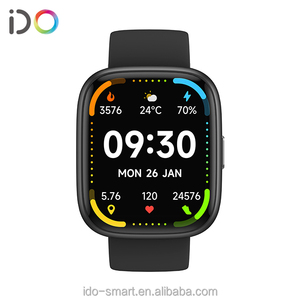
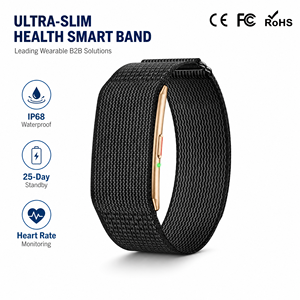
Explore our CE and UKCA certified senior safety wearables, featuring ultra-slim form factors, PPG cardio telemetry, SOS panic triggers, and screenless long-battery life architectures tailored for telecare brands and institutional buyers.
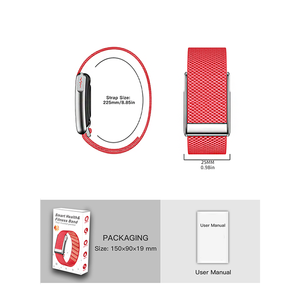
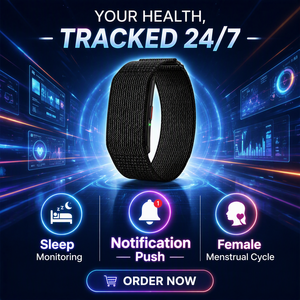
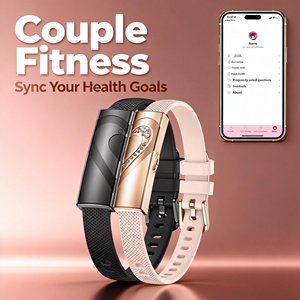
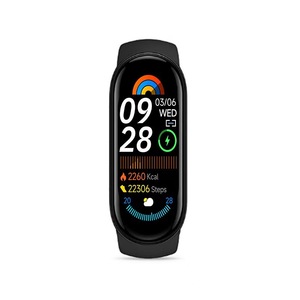
Senior Safety Wearable Engineering Standards
Built with precision European quality benchmarks, our manufacturing pipeline integrates high-frequency sensor fusion with robust cloud middleware to deliver enterprise telecare systems.
6-Axis MEMS Kinematics
Integrates high-G accelerometers and gyroscopes capable of capturing subtle dynamic vector changes during impact, free fall, and post-fall immobility.
PPG Pulse Wave Telemetry
Continuous heart rate, SpO2, and arrhythmia detection algorithms warn against syncope, pre-fainting cardiovascular spikes, and sudden postural drop.
NB-IoT / 4G LTE-M Connectivity
Independent cellular transmission modules allow real-time GPS/Wi-Fi positioning, two-way SOS voice calls, and automatic fall alert dispatches without smartphone tethering.
Executive Industry Report: Strategic Sourcing of Senior Care Fall Detection Smartwatches from China Manufacturing Hubs
The global shift toward home-based eldercare and remote patient monitoring (RPM) has accelerated the demand for intelligent, medical-grade senior safety wearables. As the world's population over age 65 expands toward 1.6 billion by 2050, fall-related injuries represent the leading cause of fatal and non-fatal trauma in elderly populations. For international telecare brands, healthcare procurement agencies, and brand owners seeking high-volume OEM/ODM solutions, China’s hardware ecosystem provides unparalleled technical sophistication, supply chain resilience, and cost efficiency. However, navigating the wholesale procurement of Senior Care Fall Detection Watches requires deep technical insight into sensor fusion algorithms, regulatory compliance frameworks (such as CE MDR and UKCA), power optimization strategies, and cloud integration protocols.
1. The Micro-Architecture of Modern Fall Detection Sensors & AI Algorithms
When evaluating a China senior care fall detection watch factory, wholesale buyers must look beyond cosmetic housing designs and analyze the embedded micro-architecture. A fall event is a highly complex dynamic kinematic sequence comprising four distinct mathematical phases: the free-fall phase, the high-G impact phase, the rotational orientation shift phase, and the post-fall immobility phase.
1.1 Multi-Sensor Kinematic Fusion Matrix
Legacy fall panic buttons relied on simple threshold acceleration sensors, leading to excessive false alarms triggered by daily activities such as sitting down abruptly, dropping a wrist onto a table, or clapping hands. High-tier ODM factories now deploy 6-axis or 9-axis MEMS inertial measurement units (IMUs) engineered with ultra-low-power microcontrollers (MCUs):
- High-G Accelerometers: Measure rapid velocity changes across X, Y, and Z spatial vectors, capable of recording deceleration forces up to ±16G during floor impact.
- 3-Axis Digital Gyroscopes: Track angular momentum variations, measuring wrist angle velocity changes that occur when an individual loses balance.
- Solid-State Barometric Altimeters: Detect rapid micro-altitude drops (down to 15 centimeters) within milliseconds, confirming that the wearer's torso or wrist has physically collapsed to floor level.
- PPG Heart Rate & SpO2 Sensors: Continuously monitor pulse rate variability and blood oxygen saturation. Sudden cardiovascular drops or cardiac arrhythmias often precede syncopal falls, providing valuable context for predictive health analytics.
| Architecture Generation | Primary Sensors Used | False Positive Rate | Battery Consumption | Target Sourcing Application |
|---|---|---|---|---|
| Gen 1 (Basic PERS) | Single 3-Axis Accelerometer | 12.5% – 18.0% | Ultra Low (< 2mA) | Low-Cost Emergency Pendants |
| Gen 2 (Smartband) | 6-Axis IMU + Optical Heart Rate | 3.2% – 5.5% | Moderate (15-20 Days) | Consumer Health & Fitness Wearables |
| Gen 3 (AI Telecare) | 6-Axis IMU + Barometer + PPG + AI Edge | < 0.5% | Optimized (25-45 Days) | Medical RPM & Institutional Nursing Homes |
2. Key B2B Procurement Trends Shaping the Senior Care Smartwatch Market (2025–2030)
Wholesale distributors and telecare platform providers must align their product roadmaps with evolving healthcare delivery models. Key procurement trends include:
2.1 The Rise of Screenless & Minimalist Form Factors
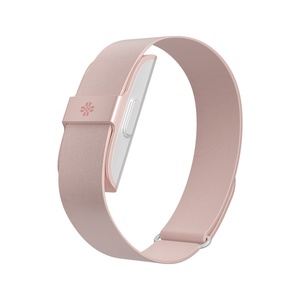
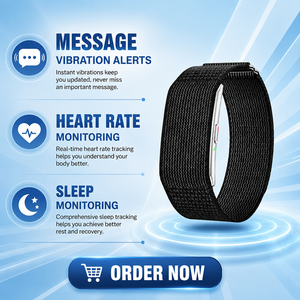
While consumer smartwatches feature vibrant AMOLED touchscreens, senior care procurement is shifting heavily toward screenless smart bracelets (such as the 7.5mm ultra-thin woven loop series). Elderly individuals suffering from mild cognitive impairment (MCI), dementia, or tactile tremors often struggle with complex touch interfaces or inadvertently turn off safety settings. Screenless bands eliminate user friction, lower power consumption, resist physical damage, and blend seamlessly into daily wardrobe without stigmatizing the wearer as frail.
2.2 Standalone Cellular (4G LTE-M / NB-IoT) vs. Bluetooth Gateway Models
B2B buyers must evaluate transmission infrastructure requirements based on deployment scenarios:
- Institutional Care Homes: Bluetooth Low Energy (BLE 5.3) smartbands connected to fixed wall-mounted mesh gateways provide precise room-level indoor positioning, long battery standby (up to 45 days), and low unit costs.
- Independent Active Seniors: Integrated 4G LTE-M / NB-IoT watches equipped with eSIM or Nano-SIM slots enable independent outdoor cellular connectivity. Built-in GPS, Beidou, and Wi-Fi triangulation allow emergency responders to pinpoint fall locations anywhere globally.
2.3 Cloud-Agnostic API & SDK Architecture
Forward-thinking wholesale buyers no longer seek standalone consumer apps. Instead, they require China ODM partners to deliver customizable open SDKs, Bluetooth protocol documentation, and cloud API endpoints (MQTT, REST, HTTPs). This permits seamless integration into existing hospital Electronic Health Record (EHR) platforms, nursing home management dashboards, and municipal emergency response systems.
3. Navigating Regulatory Compliance & Certifications for International Distribution
Importing senior safety wearables into North American, European, and Asia-Pacific markets requires strict adherence to international safety, health, and radio standards. A qualified OEM manufacturer must provide full compliance documentation for:
- European Union (CE MDR / RED): Compliance with Radio Equipment Directive (RED 2014/53/EU) for wireless safety, EN 50134-2 standards for social alarm systems, and RoHS/REACH environmental safety testing. Medical-grade variants must meet CE MDR (EU 2017/745) requirements.
- United Kingdom (UKCA): Conformity Assessed certification post-Brexit, matching mandatory radio spectrum and electrical safety criteria.
- United States (FDA & FCC): FCC Part 15 subpart B/C certification for wireless emissions. Devices claiming medical diagnostic capability require FDA Class II 510(k) clearance or De Novo authorization.
- Quality Management Systems (ISO 13485): Manufacturing plants producing healthcare wearables should hold ISO 13485 certification for medical device manufacturing, guaranteeing traceability, raw material purity, and cleanroom assembly.
4. Customization (OEM/ODM) Strategy: Building Brand Equity
To maximize commercial margins, B2B importers should leverage factory OEM/ODM capabilities to customize both hardware and firmware features:
- Casing & Ergonomics: Selection of hypoallergenic materials, such as surgical-grade stainless steel backs, carbon fiber composite shells, and medical-grade silicone or woven nylon straps that prevent skin irritation over long wearing periods.
- Custom Haptic & Voice Prompts: Programming localized voice alerts, customizable vibration feedback, and multilingual screen menus tailored to specific target demographic regions.
- Private-Label Packaging & Branding: Laser-etched backplate logos, custom boot animation graphics, branded user manuals, and customized retail or enterprise bulk packaging.
Why Partner With Our China Smartwatch Manufacturing Hub?
Leveraging decades of wearable technology R&D and European distribution compliance experience (CE, UKCA, ISO 13485), we supply premium telecare solutions to over 20 countries worldwide.
Full OEM/ODM Customization Pipeline
From 7.5mm screenless minimalist bracelets to high-definition AMOLED emergency smartwatches, we provide full-stack hardware design, SMT mounting, tooling development, and custom firmware compilation.
Strict European & Global Compliance
Every senior safety smartwatch is tested for IP68 dust/water immersion, drop durability, ESD immunity, and thermal stability, holding valid CE, UKCA, and RoHS documentation for instant market clearance.
Advanced Medical & Sensor Algorithms
Our in-house bio-signal laboratory refines posture recognition algorithms and PPG pulse wave analysis to ensure industry-leading fall verification accuracy with near-zero false alarms.
Cloud Middleware & Telecare SDK Support
We empower healthcare operators and B2B buyers with comprehensive Bluetooth/Cellular protocols, raw sensor data access, SDKs, and REST APIs for smooth platform integration.
Frequently Asked Questions (B2B Procurement)
Find detailed technical and logistical answers regarding wholesale orders, manufacturing capabilities, and fall detection watch technology.
Ready to Source Senior Care Safety Wearables directly from Factory Suppliers?
Connect with our technical sales engineers to request sample units, bulk wholesale price lists, software SDK documentation, or custom OEM mold consultations today.
Send an Inquiry