
WATCHMARK® Smartwatch & Health Technology Blog — Insights & Articles
High-Efficiency Low Power Smartbands & Wearables
Explore our engineering-proven product lineup designed for long battery standby, continuous bio-tracking, and seamless enterprise white-label deployment.
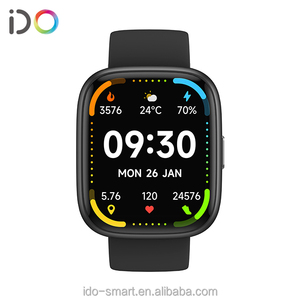
New 1.83" HD Premium Fashion Smart Watch Health Tracker Multi-Sport BT Call IP68 Waterproof
Contact Us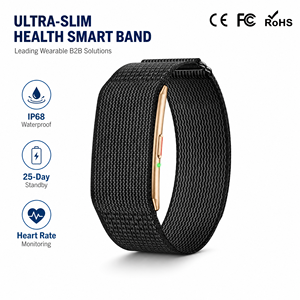
Custom Logo Screenless Smart Bracelet S07 Ultra-thin 7.5mm Health Tracker OEM ODM Woven Strap
Contact Us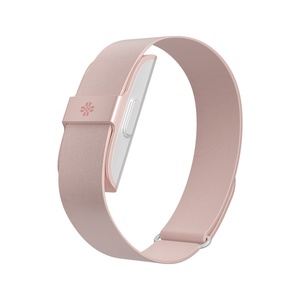
Smartwatch Smart Bracelet Sports Wristband Carbon Fiber Heart Rate & Blood Oxygen Monitor
Contact Us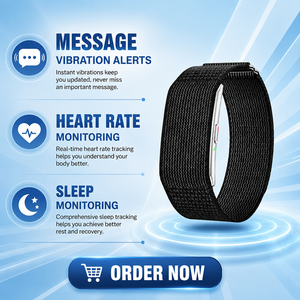
Screenless Smart Bracelet Health Monitoring Woven Wristband Vibration Alert Minimalist Smartband
Contact Us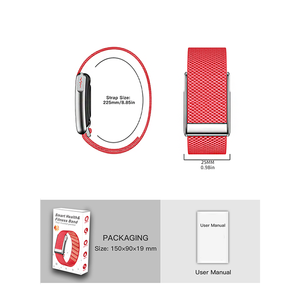
Screen Free Smart Bracelet Woven Strap Sport Loop 136 Sports Modes Remote View IP68
Contact Us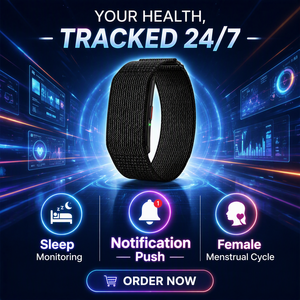
7.5mm Super Slim Smart Bracelet No Screen Waterproof IP68 25 Days Battery Life HRV SpO2 Tracker
Contact Us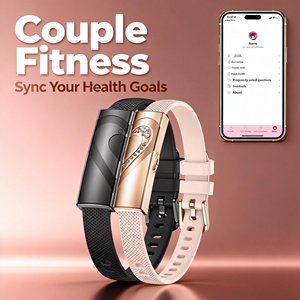
2026 Bluetooth Smart Bracelet Blood Pressure Oxygen Saturation Health Monitor Standby 45 Days
Contact Us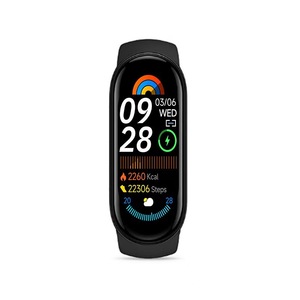
M9 Smart Sports Bracelet Message Notifications Health Monitoring Multilingual Support Pedometer
Contact UsThe Architecture of Ultra-Low Power Wearable Microelectronics
A technical analysis of silicon efficiency, optical sensor optimization, and firmware power states for global B2B procurement decision-makers.
In the highly competitive global wearable technology landscape, power management has emerged as the single most critical engineering benchmark separating market leaders from commodity OEMs. As consumer preferences pivot from power-hungry, high-refresh display smartwatches toward minimal-footprint, screenless bio-trackers and continuous monitoring smartbands, top-tier manufacturing facilities in China have undertaken a fundamental redesign of hardware architectures. Achieving operational lifespans of 25 to 45 days on a single lithium-polymer charge requires a holistic synergy between ultra-low power Microcontroller Units (MCUs), dynamic Power Management Integrated Circuits (PMICs), low-duty optical PPG sensors, and optimized Bluetooth Low Energy (BLE 5.3) protocol stacks.
1. Microcontroller Unit (MCU) Power Domain Scaling
Modern low-power smartbands rely on advanced ARM Cortex-M4 or Cortex-M33 architectures fabricated on sub-22nm processes. By leveraging Subthreshold Power-Optimized Technology (SPOT), these microcontrollers execute complex digital signal processing (DSP) algorithms—such as Heart Rate Variability (HRV) calculations and Photoplethysmography (PPG) pulse wave filtering—at fractions of traditional microampere per megahertz (µA/MHz) figures. Our manufacturing setups integrate dual-core microcontrollers where an ultra-low power core handles sensor data gathering in sleep mode while the primary application core remains completely unpowered until triggered by motion or threshold alerts.
2. Optical Bio-Sensor Pulse-Width Modulation (PWM) & Algorithmic Duty Cycling
Optical heart rate, blood oxygen (SpO2), and blood pressure estimation modules represent the largest active current drain in wearable electronics. Standard continuous LED driving circuits can draw upwards of 1.5 mA to 5 mA during active photodiode sampling. China's leading low-power smartband factories resolve this through micro-second pulse width modulation (PWM) and intelligent motion-aware sampling duty cycles. By pulsing the green, red, and infrared LEDs at micro-second intervals and utilizing high-sensitivity photodetectors, light emission duty cycles are reduced without sacrificing medical-grade PPG signal integrity.
Furthermore, embedded accelerometer data dictates PPG sampling frequencies. When the user is at rest or during slow-wave sleep phases, firmware dynamically shifts optical sampling from continuous 25 Hz intervals to intermittent 1-minute bursts, lowering the overall daily battery draw of the health tracking sub-assembly by over 80%.
| Architecture Metric | Legacy Smartband (2020-2022) | Next-Gen Low-Power Smartband (2025+) | B2B Procurement Advantage |
|---|---|---|---|
| Battery Standby Duration | 5 - 7 Days | 25 - 45 Days | Drastically reduced return rates & elevated customer satisfaction |
| Active PPG LED Current | 3.5 mA - 5.0 mA | 0.4 mA - 0.8 mA | Enables 24/7 continuous health tracking without rapid drain |
| Bluetooth Protocol | BLE 4.2 / 5.0 | BLE 5.3 Low Energy Audio & Data | 30% faster sync speeds, lower transmission power spikes |
| Enclosure Thickness | 10.5 mm - 13.0 mm | 7.5 mm - 8.5 mm Ultra-Slim | Modern minimalist design suitable for corporate wellness & gifts |
| Water Ingress Standard | IP67 Surface Level | IP68 / 5ATM Industrial Waterproof | Suitable for swimming, sports, and harsh industrial environments |
Future Procurement & Sourcing Trends (2025–2030)
Key market shifts driving bulk enterprise orders, screenless form factors, and corporate health deployments.
As corporate health initiatives, insurance telemetry programs, and remote patient monitoring (RPM) platforms scale globally, B2B importers and brand owners are re-evaluating their wearable product roadmaps. Procurement data reveals three massive industry macro-trends influencing factory production lines in China:
Screenless Minimalist Bands
Consumers are increasingly suffering from "screen fatigue" caused by constant smartwatch notifications. Screenless smartbands (such as ultra-thin 7.5mm woven strap models) focus entirely on ambient health monitoring without digital distractions, driving massive B2B demand for corporate gifting and wellness subscription bundles.
Medical-Grade PPG & HRV Accuracy
Commercial buyers no longer accept basic pedometer metrics. Modern procurement contracts stipulate precise Heart Rate Variability (HRV) analysis, continuous nocturnal blood oxygen monitoring (SpO2), pulse wave velocity blood pressure estimation, and stress indexing algorithms validated against clinical benchmarks.
Open API & SDK Architecture
White-label buyers demand fully customized mobile applications (iOS/Android) backed by open RESTful APIs and SDK access. This allows enterprises to integrate raw data streams from low-power smartbands directly into proprietary medical dashboards or corporate HR wellness portals.
Enterprise procurement specialists must prioritize factory partners who demonstrate robust software-hardware integration. Ordering hardware without verified Bluetooth stack stability or encrypted cloud data transmission capabilities presents severe compliance risks under global data protection frameworks like GDPR and HIPAA.
Enterprise Factory Capabilities & Quality Control Infrastructure
Inside China's premier OEM/ODM smartband manufacturing facilities: ISO standards, automated SMT lines, and international compliance.
As an industry-leading OEM/ODM manufacturer and global supply partner, our manufacturing ecosystem combines European precision quality control protocols with Shenzhen’s world-class supply chain agility. We operate state-of-the-art cleanroom manufacturing environments designed to fulfill high-volume international contracts with zero-defect quality targets.
Automated SMT & Precision Ultrasonic Assembly
Our production floor features high-speed Siemens and Fuji Surface Mount Technology (SMT) lines capable of mounting micro-components down to 0201 package sizes with sub-micron accuracy. Enclosures are sealed using automated ultrasonic welding and multi-component hydrophobic adhesive dispensers, ensuring absolute IP68 water resistance under 50-meter hydrostatic pressure tests.
Rigorous Quality Assurance & Aging Tests
Every low-power smartband undergoes 100% automated optical inspection (AOI), 24-hour battery cycling test, salt-spray corrosion exposure, thermal shock testing (-20°C to +60°C), and multi-axis drop simulation. We ensure that operational battery life metrics match real-world consumer usage patterns before shipment packaging.
Our production facilities maintain comprehensive compliance credentials, including ISO 9001 quality management systems, ISO 13485 medical device manufacturing standards, alongside international product certifications including CE, UKCA, FCC, RoHS, and REACH. This global compliance framework empowers our international B2B partners to import and distribute smartbands smoothly across European, North American, and Asia-Pacific markets without regulatory friction.
Frequently Asked Questions for Bulk Smartband Procurement
Answers to crucial technical, logistical, and customization questions asked by international buyers and brand owners.
How does your factory achieve a 45-day battery standby life in screenless smartbands?
Our 45-day ultra-long standby is accomplished through three engineering pillars: (1) Integrating ultra-low power ARM Cortex processors running on subthreshold voltage rails, consuming <3.5µA in sleep mode; (2) Utilizing motion-triggered algorithmic sampling for optical PPG LEDs, reducing active optical sensor draw by 80%; and (3) Implementing custom BLE 5.3 firmware stacks that optimize sleep clock timers and minimize advertising burst durations.
What OEM/ODM customization options are available for bulk orders?
We provide complete end-to-end OEM/ODM customization. Hardware options include custom laser-etched logos, bespoke enclosure colors, ultra-thin 7.5mm housing modifications, and specialized strap materials (breathable woven loops, TPU, food-grade silicone, carbon fiber). On the software side, we offer custom mobile app branding (iOS/Android), white-label UI design, custom firmware boot screens, and raw data API/SDK integration.
What are the minimum order quantities (MOQ) and production lead times?
Standard white-label products in stock carry an MOQ of 500 units. Custom logo printing and packaging modifications start at an MOQ of 1,000 units, while deep ODM hardware/firmware customization requires 3,000 to 5,000 units. Mass production lead time is typically 18 to 25 business days following sample approval and engineering sign-off.
What international regulatory certifications do your smartbands possess?
All smartband products manufactured in our facilities strictly conform to international safety and electromagnetic standards. Our standard product lines hold valid CE, UKCA, FCC, RoHS, and REACH certificates. Factory operations comply with ISO 9001 and ISO 13485. Certificate documentation and test reports are provided during contract negotiation for seamless customs clearance.
How is water resistance tested and guaranteed for IP68 / 5ATM models?
Waterproofing is guaranteed through multi-stage inline pressure testing. 100% of manufactured units undergo automated pneumatic dry-leak testing prior to assembly completion, followed by batch sampling under actual hydrostatic water pressure chambers matching IP68 and 50-meter (5ATM) depth standards.
Partner with China's Premier Low-Power Smartband Manufacturer
Request sample units, technical documentation, factory audit reports, and customized B2B price quotes tailored to your market requirements.